Northern Colorado is a place where the ground has been used for a long time. Fields were irrigated here before the subdivisions arrived, the Cache la Poudre River still runs through the middle of the region, and a university town grew up on one side of it. A new building in Fort Collins is rarely placed on empty land. It lands among ditches, old pipe, historic blocks and neighbors who notice what happens next door. Concrete Contractors of Fort Collins works with that fact in mind, and this page describes how.
We are a concrete, underground utility and earthwork contractor serving Fort Collins, Loveland, Greeley, Windsor and the smaller towns around them. We grade the site, we put the pipe in the ground and we pour the structure and the pavement on top. The work is varied, so the point of this page is less a list of services than an account of the questions we ask before we begin.
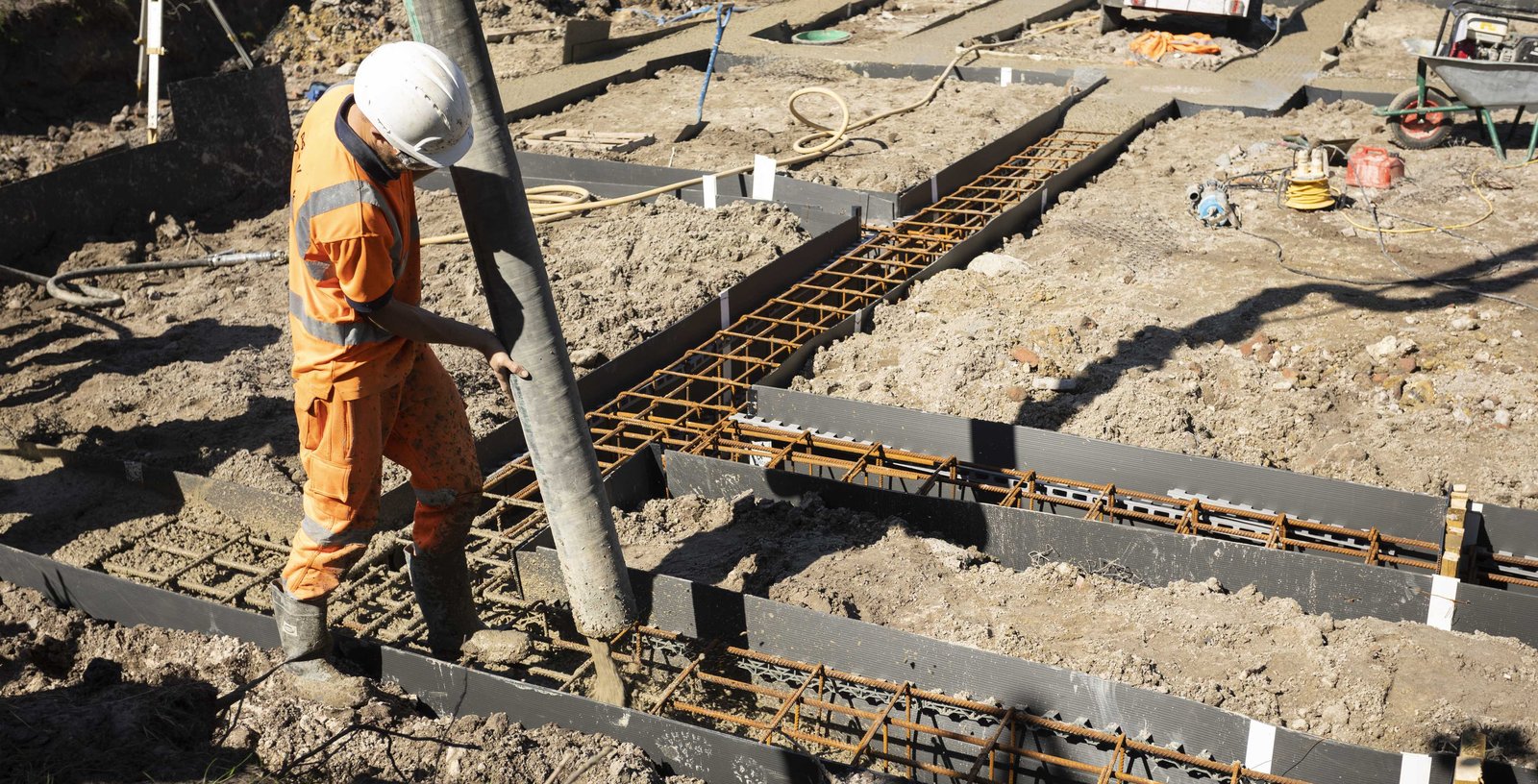
The first question on any northern Colorado site is what already crosses it. Irrigation ditches, laterals and field drains run across a lot of land that is now being built on, and the people who own the water rights have their own requirements for how a crossing is made. We find those lines early and ask the ditch owner for their conditions before we price. Where a crossing is needed, culverts and headwalls carry the flow under a drive or a road, and we size the structure, set the bedding and protect the channel while the work is open.
The second question is how high the water table sits. Along the Poudre, the South Platte and the Big Thompson, groundwater can be close to the surface in the spring, and a trench or a footing that was dry in the fall may not be dry in May. We plan dewatering of the excavation into the bid, not as an extra, and we keep the discharge within the permit that governs it. Horsetooth Reservoir, west of town, holds 156,735 acre-feet behind four earthen dams, and it is a reminder of how much of this region's landscape is shaped by moving water.
The third question is about the buried utilities. Water, sewer, storm, gas, electric and fiber all share the right of way, and in the older parts of town their records are incomplete. We pothole, we expose, we measure and we write down what we find, because a conflict that gets recorded in week one rarely turns into a change order in week five.
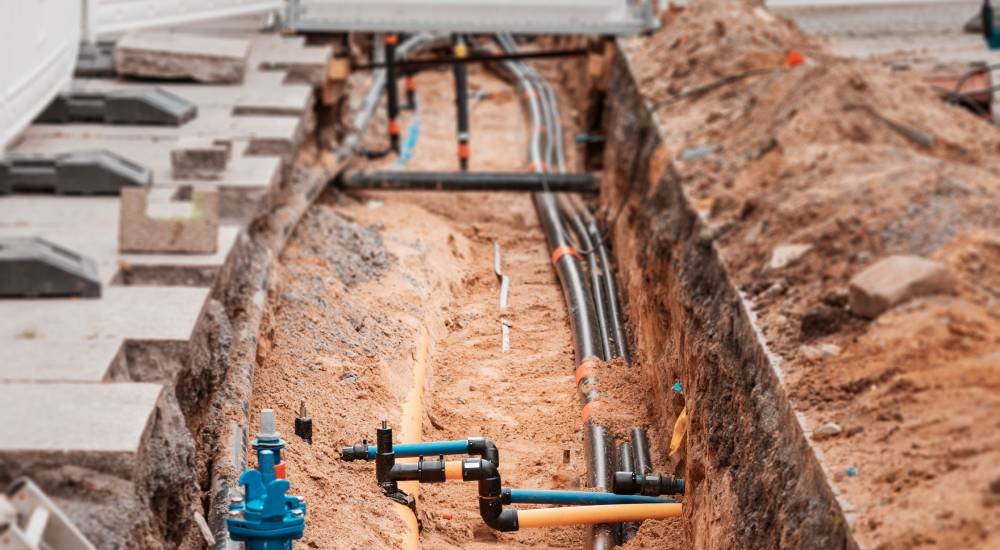
Old Town Fort Collins is a National Register district of roughly 26 acres with 38 contributing buildings, listed on August 2, 1978, and it overlaps a city historic district that sets design standards for what the public sees. Our work there tends to be small in footprint and exacting in finish: a utility replacement in an alley, a new floor in an existing storefront, sidewalks and flatwork that must match the surface beside them. We ask for the design review requirements first, build a sample panel when a finish has to match, and schedule around the businesses on the block.
The same care is useful around the university. Colorado State University's main campus covers 583 acres, and its Foothills campus, on the northwest edge of the city, covers more than a thousand acres of research buildings and open ground. The CSU Foothills campus and the Powerhouse Energy Campus north of Old Town show the kind of owner we work for in the area: one that cares about vibration, floor flatness, drainage and long-term performance. Poudre Valley Hospital, with 270 beds and a Level III trauma designation, adds a medical customer whose sites cannot be disrupted.
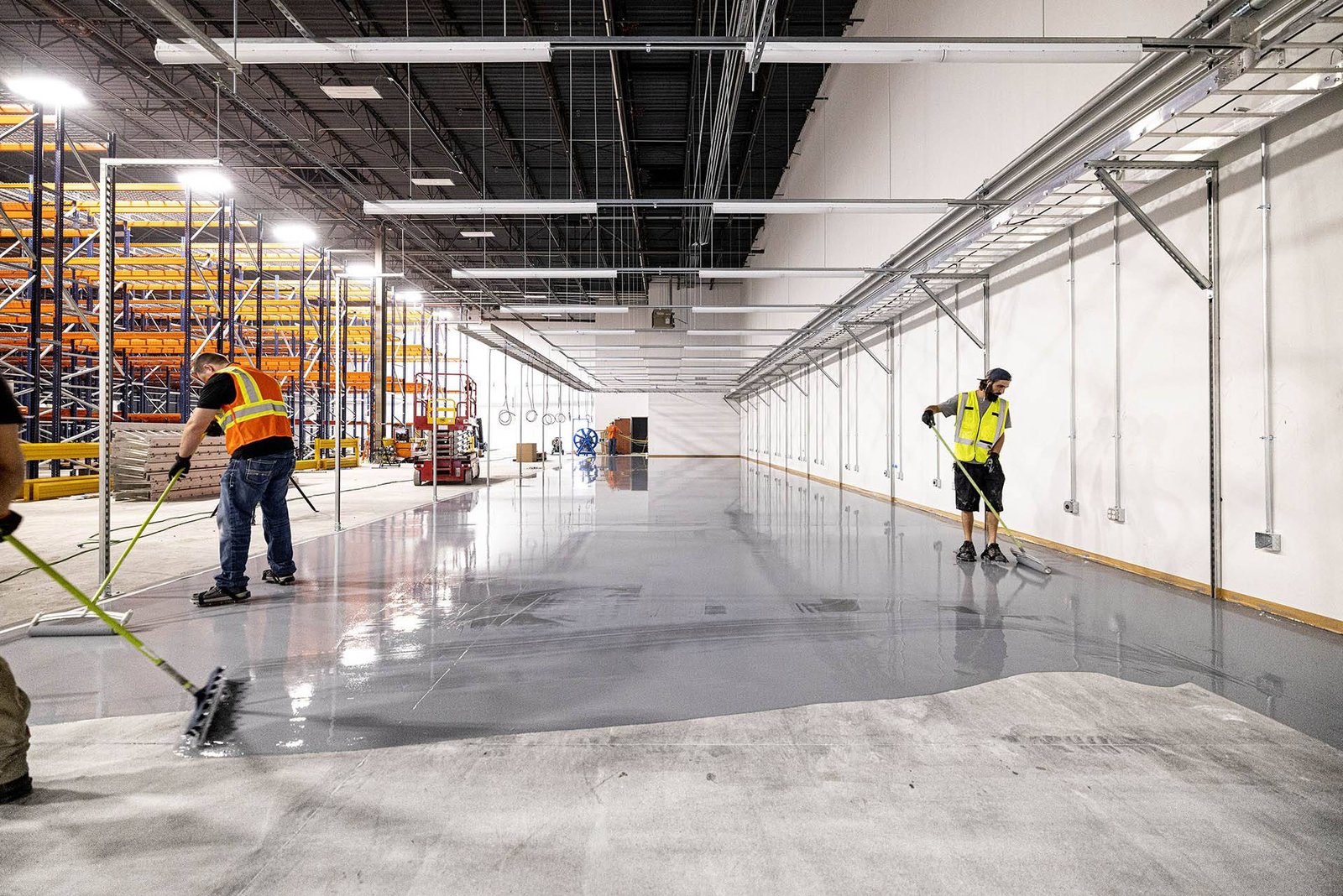
Northern Colorado builds things that are made here: beer, food, feed, equipment and research results. That means floors that have to be sloped to drains, sealed against washdown and cut for trenches before the equipment arrives. A production floor in a food and beverage plant is a different animal than a warehouse floor, and a laboratory or bioscience building is different again. We pour the floors, we form the drains and curbs, we build the equipment pads and we coordinate the embeds and sleeves with the mechanical trades, because a missed sleeve costs more than the pour.
Agriculture is its own category. Feed lanes, silage pads, wash pads, scale foundations and wastewater containment all take punishing loads and chemicals. Our approach to agriculture and dairy work is to sequence around the animals and the milk trucks, since a working operation cannot pause for a pour. Along the I-25 corridor in Loveland, Centerra Industrial added three new 123,000 square foot buildings to a campus half a mile from the interstate, and Centerra Industrial shows how light-industrial work continues to spread north.
Our territory follows the highways. State Highway 14 leaves Fort Collins along Mulberry Street and reaches I-25 at exit 269, where the state is improving the interchange. Harmony Road carries a technology and office corridor, and Timnath, which grew from 625 residents in 2010 to 6,487 in 2020, sits half a mile from that interchange. Windsor, Severance, Johnstown, Milliken, Evans, Eaton, Ault, Kersey and Greeley lie to the east, and Berthoud, Loveland and Estes Park to the south and west. Northern Colorado Regional Airport occupies 1,065 acres southeast of Fort Collins, and Wellington is the northernmost town on I-25 in the state.
These places do not share one code. Fort Collins treats the 2024 International Building Code with local amendments as current for permits submitted on or after April 1, 2026. Unincorporated Weld County adopted the 2024 code effective June 15, 2026 and requires engineered foundation designs for most new structures. The elevation changes as well, from 4,623 feet at Kersey to 7,743 feet at Estes Park, which affects frost, wind and the length of the pour season. We confirm each jurisdiction before we write the proposal.
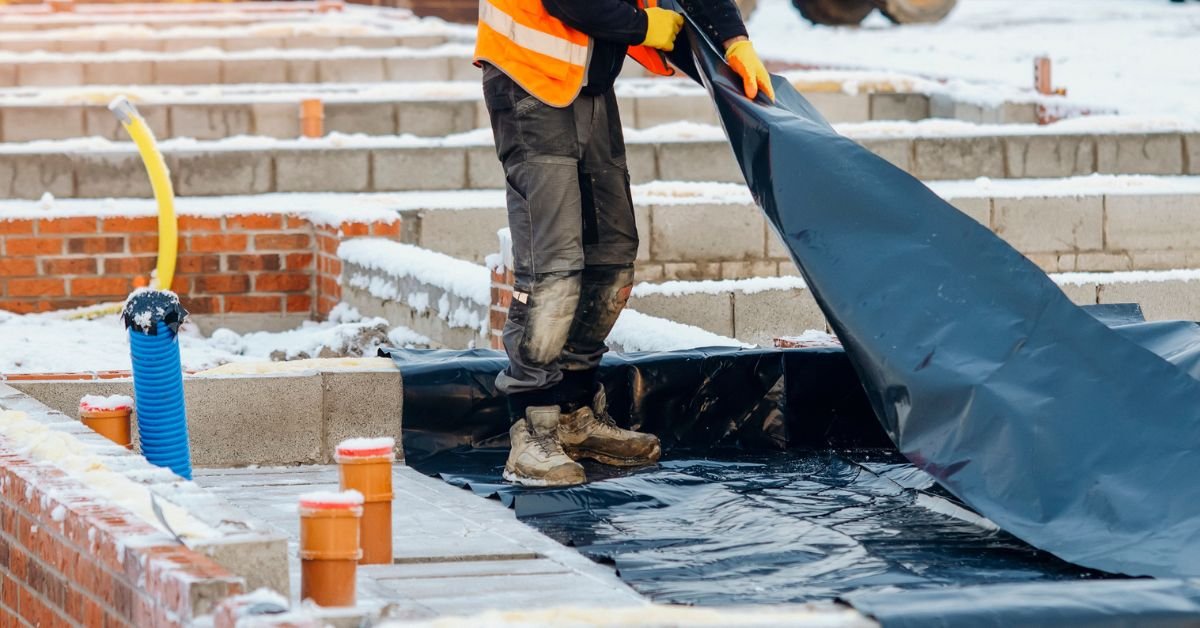
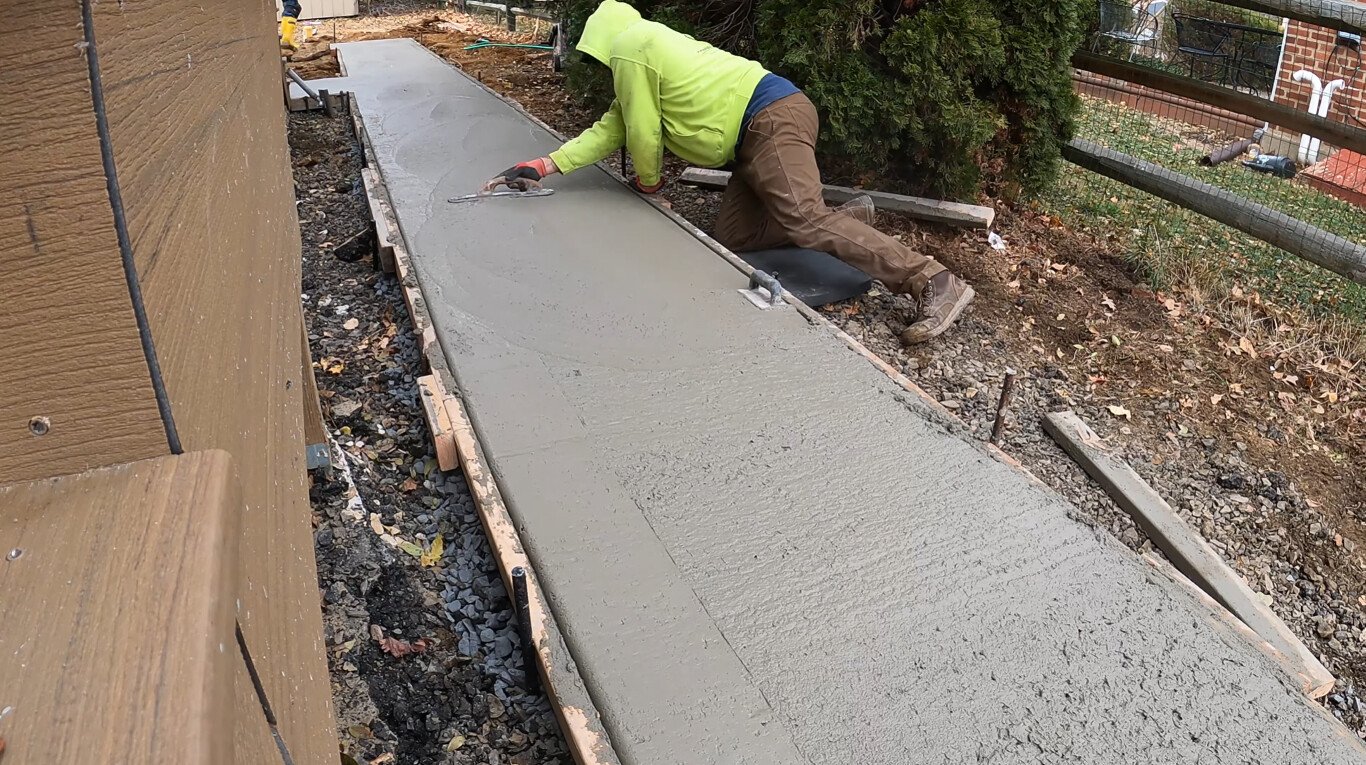
The Front Range gives concrete work a short list of problems and no way around them: freezing nights, drying wind, afternoon storms and ground that holds frost late in spring. We plan every pour with the weather in front of us, follow a written cold weather concrete plan with blankets and protected subgrade, keep surfaces moist in the wind and cure for the full period regardless of how eager the next trade is. The subgrade is proof-rolled before the base goes down, and the density tests are filed with the cylinder results.
Spring and early summer bring a different test. Thunderstorms arrive fast, and a half-finished trench or an open pad can collect water in minutes. We keep pumps and temporary berms on the schedule, close trenches at the end of each shift where we can, and stabilize slopes before the forecast turns. A site that is protected in advance is back to work the next morning, while one that is not may lose a week.
Underneath that routine is a habit: we write down what we expect before we start, and we compare it to what we find. A quantity, a depth, a haul distance and a weather window go into the proposal. When the ground or the weather changes them, the owner gets the new number and the reason the same day.
Yes. We find the ditch early, ask the owner for crossing and protection requirements, and plan the culvert, headwall or bore into the sequence before we set a price.
We review the design standards first and build sample panels for texture, color and joint pattern. Approval of the sample comes before the full pour.
Fort Collins, Loveland, Greeley, Windsor, Johnstown, Timnath, Wellington and the smaller Weld County towns, plus Estes Park and Berthoud.
Yes. We build feed lanes, pads, wash areas, scale foundations and containment, and we plan the work to keep animals and trucks moving.
The address, the plans or a sketch, the geotechnical report if there is one, and the date you need the work finished.