Every earthwork bid starts as a question about where the dirt goes. A site that is cut on the high side and filled on the low side can balance on paper, and then the topsoil is stripped, the fill shrinks as it is compacted and the utility trenches take a share of the cut, and the balance moves. We treat the quantity takeoff as a working document for exactly that reason, and we revisit it as the ground is opened.
Cut and fill is the movement of soil from the places where the design grade is lower than the existing ground to the places where it is higher. On the northern Front Range that is mostly a story about gentle slopes, irrigation ditches and agricultural parcels turning into buildings, roads and ponds, where a few feet of change across a hundred acres adds up to a great many truck loads.
We perform cut and fill for developers, general contractors and industrial owners who want the haul plan, the compaction record and the final surface to line up with the geotechnical report and the pad elevations they have already sold or leased.
The planned size of the sites around us explains the scale of the work. The Ridge at Johnstown is a 265-acre master-planned mixed-use site with 90 acres of I-25 frontage, and a Highway 60 and I-25 project in the same town was described in 2022 as planned for more than 1,000 housing units and more than 1 million square feet of retail. Land at that scale rarely sits level, and getting pads, streets and ponds to their design elevations is mostly a matter of moving material across the site.
Closer to Fort Collins, industrial, flex and distribution center projects on the east side near I-25 and Prospect Road bring the same questions at a smaller scale: a building pad, a fenced yard, a truck court and a detention area that all have to meet. A newly built 24,000 square foot industrial building at that interchange comes with about 0.6 acres of fenced yard and room for about 3.5 more acres, and each of those acres is a grading decision. In both settings the existing ground is usually farm or fallow land with a layer of organic topsoil to set aside before any real cut begins.
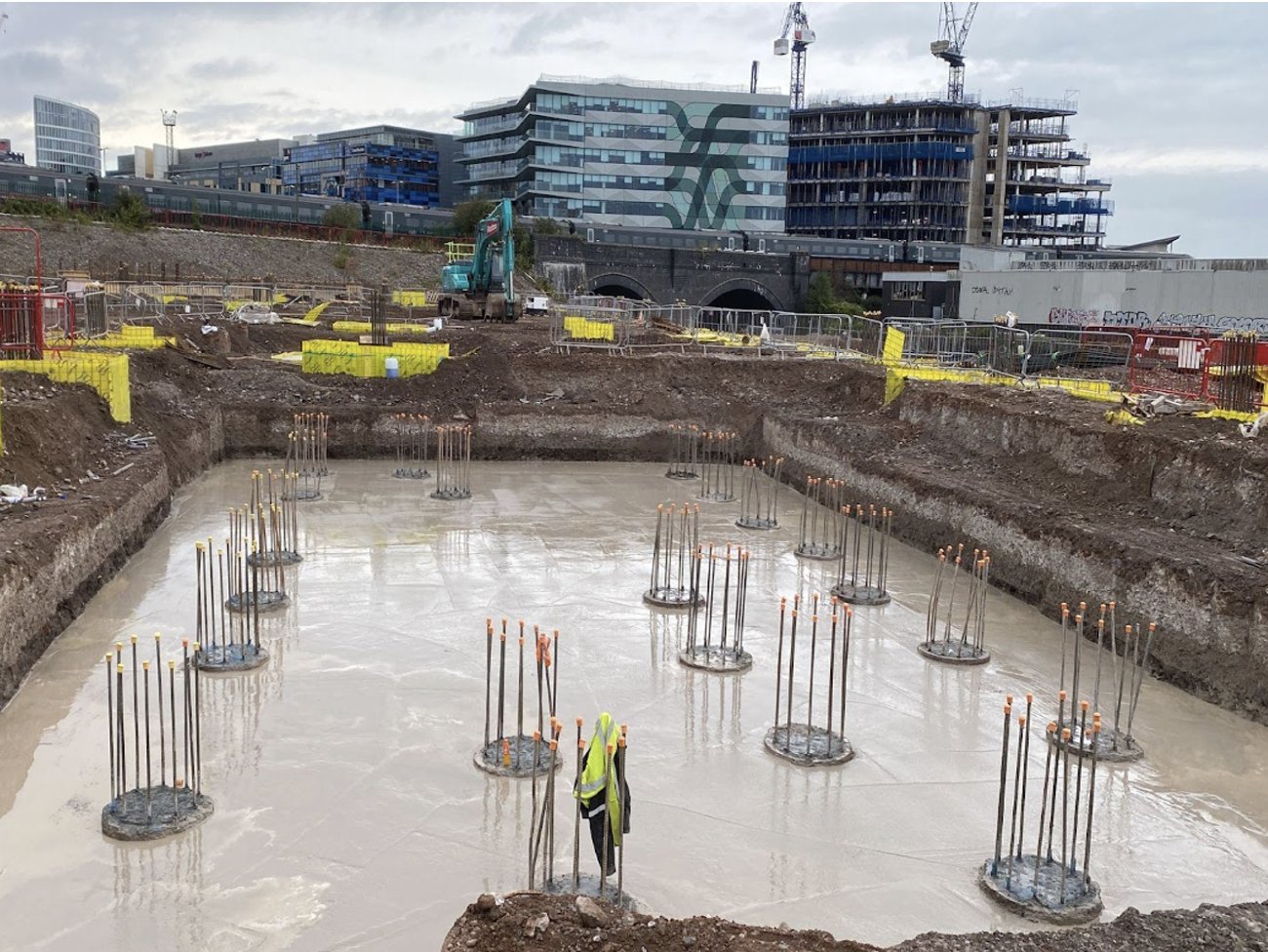
The scope starts with clearing and stripping, and then moves into cutting high areas and placing the material in lifts in the low areas. Fill is spread in layers thin enough for the compaction equipment to reach full depth, moisture conditioned toward the optimum the geotechnical report gives, compacted, and tested. Cut slopes and fill slopes are shaped to the grade shown on the plans and, where required, benched into existing slopes so new fill does not slide on old ground.
We also run the less glamorous parts of the job: the proof-roll on exposed subgrade, the removal of unsuitable material found in the cut, the stockpile for topsoil that will return to landscape areas, and the as-built survey that shows the final surface against the design. Where cut and fill meet under a building, we coordinate with over-excavation and recompaction so the transition is handled once and not discovered later.
We build a mass-haul picture before we mobilize, with swell and shrink assumptions taken from the geotechnical report instead of a rule of thumb. That tells us which direction the trucks run, how many scrapers or trucks the haul distance supports and whether the site will end with a surplus or a shortfall. A surplus becomes an export plan and a shortfall becomes an import plan, and both are covered in import, export and haul-off.
In the field we keep fill lifts disciplined. Mixed lifts of wet clay and dry sand are a common source of failed density tests, so we keep material types separate where we can and condition the moisture on the fill, not after it is spread. Equipment is matched to distance: dozers for short pushes, scrapers or trucks for longer hauls, and a water truck on every active fill to hold dust and moisture.
Ditches and laterals cross a lot of Northern Colorado land, and a cut that touches one needs a plan for keeping water flowing or temporarily diverting it. Existing buried lines, abandoned irrigation pipe and old fill pockets also turn up in the cut. We locate known utilities before digging, and we stop and document anything unexpected so the owner and engineer can decide what to do with it.
Drainage during construction matters as much as drainage in the final design. A half-built fill can pond water in a low corner for weeks, and the next rainstorm turns a compacted surface into a soft one. We shape interim grades to shed water, keep temporary berms or swales connected to the erosion-control plan covered under erosion control and SWPPP, and avoid leaving a loose lift exposed overnight when rain is forecast.
Earthwork is the trade most affected by weather. Dry summer conditions give the best production but demand aggressive moisture and dust control, while spring and fall bring rain that stops fill placement and softens cuts. Winter earthwork on the Front Range is possible when the ground is not frozen, and we do not place fill on or against frozen subgrade or build lifts from frozen material.
For a typical site we target getting the building pads and the main street subgrades to final elevation first, because those control the vertical trades, and finish the ponds and landscape areas last. That order lets the building pad preparation crew and the utility contractor start while remaining earthwork continues elsewhere on the same site.
Earthwork cost is dominated by how far the dirt moves and how many times it is handled. Material that must be stockpiled and rehandled costs more than material moved directly from cut to fill, and imported or exported soil adds trucking, tipping and sometimes testing for clean fill. Rock or cemented layers in a cut slow production sharply and are priced as their own item.
Density testing, survey and re-compaction after rain are smaller line items that decide whether a project finishes on budget. We work with commercial developers to agree on the assumptions behind the earthwork unit prices at the start, including how a change in swell, shrink or moisture would be handled, so the price holds up when the ground turns out to be a little different from the report.
Share the grading plan, the geotechnical report and your target schedule. We will return a haul and balance outline, a list of assumptions and a price for moving the earth the site actually needs moved.
We compare the cut and fill volumes from the grading plan, adjust for topsoil stripping, swell and shrink from the geotechnical report, and subtract the volume taken by utility trenches and foundations. The result is a working balance, not a promise. If it leaves a surplus or deficit, we raise the import or export plan before the first load moves.
We place fill to the density and moisture range in the project specification or geotechnical report, usually expressed as a percentage of a laboratory maximum density. The owner's testing firm verifies it with density tests at set intervals. If a lift fails, we rework it before covering it.
Yes, on unfrozen ground and with unfrozen material. We cannot compact frozen soil or place fill on a frozen surface, so cold snaps can stop work for days. We plan critical pad and subgrade work for months when it can be done properly.
We stop, document it with photos and survey, and notify the owner and engineer. Buried irrigation lines, old foundations and soft pockets are the most common finds. The decision to remove, relocate or leave them is made with the design team before we continue.
We work from the project survey control and use machine control on grading equipment. We provide an as-built check of final surfaces so the engineer can compare them with design, and we can coordinate with the owner's surveyor for formal documentation.