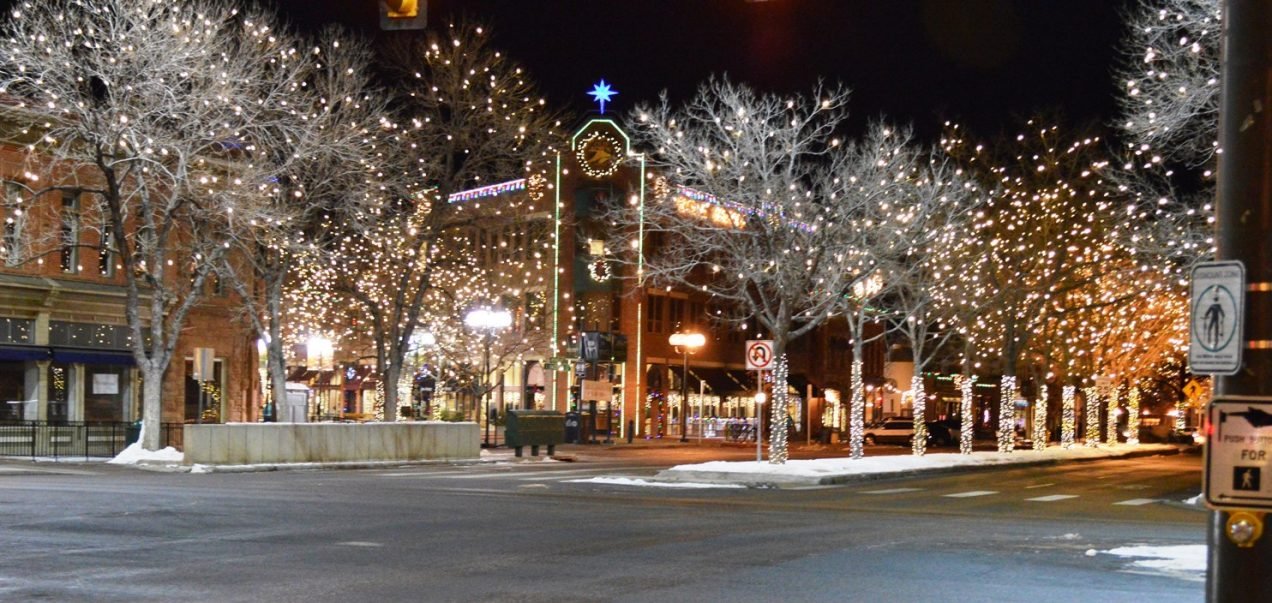
A historic block does not forgive a casual contractor. In Old Town Fort Collins the work is mostly small in footprint and large in consequence: a utility replacement in an alley, a new slab inside an existing storefront, sidewalk and curb flatwork that has to match what is next to it, all inside a National Register district of roughly 26 acres with 38 contributing buildings, listed on August 2, 1978.
A city-designated Old Town Historic District dating to 1972 overlaps the National Register district and imposes design standards, and an overlapping River District extends north and east to the Cache la Poudre River. Those standards govern what the public sees, and flatwork, curbs, ramps and paving are all visible. We ask for the design review requirements before we price, and we build sample panels where finishes have to match.
The district is bounded by N. College Avenue on the west and E. Mountain Avenue on the south, with Pine, Willow and Walnut Streets forming the other edges. Our work is staged from those streets, and deliveries have to fit between pedestrians, parked cars and open storefronts.
Old masonry and old foundations react to nearby digging. Before we excavate near a historic wall, we document existing conditions with photographs and, where the owner asks for it, a pre-construction survey. We dig by hand where required, limit the size of equipment and place backfill in light lifts so nothing is pushed against a wall that was not designed for it.
Vibration is managed in the same way. Plate compactors are chosen over rollers near foundations, saw-cutting replaces breaking where a clean edge is needed, and a monitoring plan is available if the owner or the preservation reviewer requires it. We treat adjacent buildings as occupied, because they are.
Sidewalk and plaza work in a historic district is more than a pour. Decorative and stamped concrete may be called for where a pattern, a color or an edge has to relate to what exists. We build the sample, ask for approval and match the joint pattern before we place the production work.
Not every project is new. When the existing concrete is sound but worn, concrete repair and restoration can save the original surface, and we explain what is practical. When it is not, we saw-cut clean edges so the patch meets the old work cleanly.
A joint pattern in new flatwork should read as part of the street. We study the existing layout, lay out new joints to follow it and cut them at the right time, using concrete sawing, cutting and coring to leave straight, sound edges. A neat saw cut is the cheapest way to make a repair disappear.
Color and texture matter as much as geometry. We cast samples, view them in daylight beside the existing surface and adjust before committing. Curing is controlled so the color is even, and we protect fresh concrete from foot traffic and weather with barriers and covers, because a single footprint in a public sidewalk is on display for years.
The Cache la Poudre River flows through Fort Collins and is subject to sudden, destructive floods. An 1864 flood destroyed Camp Collins at Laporte, after which the military relocated the camp and renamed it Fort Collins, and the city still experiences periodic flooding from the river. Ground in the River District can hold water, and excavations there are planned with that in mind.
For underground work we keep pumps ready, protect excavations from surface runoff and coordinate with the city on storm drain installation or modification so a new run does not send water toward an old basement. Trench protection, traffic control and pedestrian detours are in the plan before the first cut.
Work in the street or sidewalk needs right-of-way permits, and work on a contributing building may need design review. The review process takes time, so we ask owners to start it early and bring us the drawings as soon as they exist. We schedule around approvals, not ahead of them.
Many sites also sit near the Powerhouse Energy Campus side of town, where north-of-Old-Town projects see similar traffic and utility conditions. The trade crews are used to working in dense areas, and we plan the daily routine, including deliveries, cleanup and the hours we make noise.
New work in the district is mostly infill. An office building or a restaurant renovation needs a slab that meets an old floor at the same elevation, a trench for new plumbing and a sidewalk repaired afterward. We sequence those pieces so the business interruption is as short as it can be.
For commercial developers reusing an older building, we survey the existing floor before the design is final and give the architect the actual elevations. That small step avoids a surprise when the new slab arrives at a doorway that is half an inch off.
Send the address, the drawings and any design review comments. We will respond with a staging plan, sample proposal and a schedule that respects the neighbors.
We study the existing joint pattern, color and texture, then cast samples and view them beside the old work before approval. Joints follow the existing layout, and we control curing so the color is even. Where the old surface is worn, we discuss whether to repair it or replace a full panel.
Often, yes. We stage work in sections, maintain a safe path to the door and schedule noisy or dusty operations for hours that suit the business. Some operations, such as saw-cutting or a pour, are better done early in the morning or after hours, and we agree on that with the tenant in advance.
Documenting conditions beforehand, hand-digging where necessary, using smaller compaction equipment and controlling vibration. We also place backfill in light lifts so it does not load an old foundation wall. If a monitoring plan is required, we cooperate with the consultant who runs it.
They add review time, and the best remedy is to start the review early. Owners who bring us in during design can have samples ready by the time approval is given, which shortens the path. We build the review period into the schedule.
We identify groundwater and flow paths from the geotechnical report, keep pumps and protection ready and avoid leaving excavations open. Drainage work is coordinated with the city, and new storm lines are tested before backfill. The aim is to improve the situation, not move water to a neighbor.