
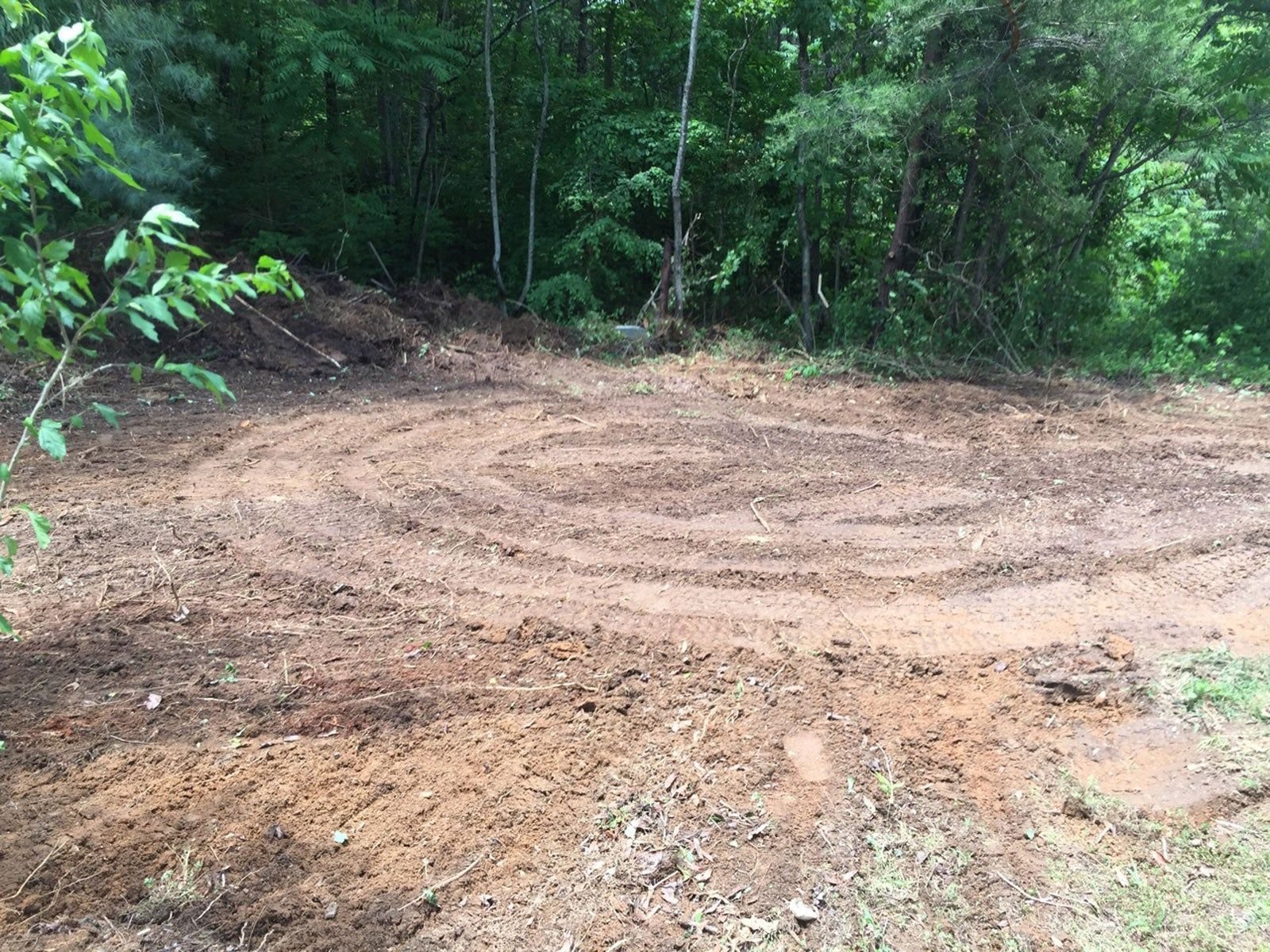
Farm fields, cottonwood lines and old fence rows are what most new development in the northern Front Range replaces, and the first job on a site like that is to take away everything that is not soil. Crop residue, tree stumps, buried irrigation pipe, abandoned wells, fences, field drains and the odd foundation all have to be found and removed before the grading plan means anything. Clearing is cheap work compared with grading, and it is the stage where the most expensive surprises first appear.
We clear and grub sites for commercial parks, subdivisions, industrial pads and roadway corridors. The work includes tree and brush removal, stump and root grubbing, removal of fences and field structures, abandonment of old lines and wells, and disposal or recycling of the debris. We sequence it with the stormwater controls so that perimeter protection is installed before the ground is opened, not after the first rain.
Timnath's growth management area is mostly low-density residential or agricultural, with open space near the Poudre River and Timnath Reservoir, and the town grew from 625 residents in 2010 to 6,487 in 2020. In Severance, agriculture remains the primary industry despite recent residential construction, and the town went from 3,165 residents in 2010 to 7,683 in 2020.
Growth on that scale arrives in large blocks. A roughly 300 acre community in Wellington with 10 acres of neighborhood commercial in its first phase and up to 60 more acres later is typical of what clearing crews face: hundreds of acres of ditches, fence lines, windbreaks and farmstead remnants that must be cleared in phases to match the grading and utility schedule. We plan the clearing limits with the phasing plan so no more ground is opened than the next stage can use.
Clearing removes vegetation above grade, grubbing removes roots and stumps below it, and both are measured against the limits shown on the plan. Trees marked for preservation are fenced at the drip line before any work begins, and the crew stays out of the protected zone. Stumps and roots are excavated to the depth in the specification, usually a foot or more below the proposed subgrade under pavement and structures, and the holes are backfilled with compacted fill.
Fences, old irrigation pipe, field tile, pump houses, wells and small outbuildings are located and removed or abandoned as the owner requires. Wells are sealed according to state rules, and irrigation lines are cut, capped or removed so they cannot carry water into the new fill. Where a structure needs more than simple removal, we handle it through demolition and site prep procedures.
Clearing is regulated by more than the grading permit. Migratory bird protections affect tree and brush removal during the nesting season, so schedules are often set to clear before nesting begins or to survey the site first. Noxious weeds on farmland and ditch banks can be spread by equipment, and many jurisdictions expect cleaning of machines and careful handling of infested soil. Wood waste has to go to a chipper, a recycler or a landfill, and open burning is limited or prohibited in most developed areas.
We review these items with the owner and the permit before we mobilize. Perimeter silt fence, inlet protection and a vehicle tracking pad are installed first, as erosion control and SWPPP practice requires, and the clearing limit is staked so the crew works only within the permitted disturbance.
Clearing is best done in dry weather, when equipment can move without rutting and roots come out of the ground clean. In the nesting season we shift to areas that have been cleared of vegetation or surveyed, and in winter we work with frozen ground, which supports equipment but makes root removal harder and delays backfill compaction. Topsoil is stripped after clearing and stockpiled, which is its own operation; see topsoil stripping and stockpiling.
The cleared area is a ready-made schedule marker. Once it is clear, the survey crew can stake grades, the utility crew can see its alignments and the grading contractor can start mass grading. We usually deliver the first block cleared and fenced within a few days of mobilizing, and continue in front of the grading machines so they are never waiting. Debris is processed on site where space allows to cut haul trips.
Before the heavy machines arrive, we walk the site with the plans and mark what we see: old pipes, wells, concrete, fuel tanks, illegal dump piles and soft areas. A buried irrigation main discovered during grading becomes a flood in the excavation, but the same main discovered during clearing is a task. We report anything unusual to the owner and engineer with a photograph and a location.
When we grub, we do not simply push roots into a pile and bury them. Organic material under a building pad or a pavement decomposes, leaves voids and causes settlement, so it is removed, hauled off and replaced with engineered fill. The cost of doing this properly is far less than the repair of a sinking slab.
On a self-storage project or a similar low-rise pad with long slabs, the savings are easy to see, and it is one reason we describe the work to owners of self-storage facilities and homebuilders and multifamily developers early.
Send the boundary, the limits of disturbance and the phasing plan and we will walk the site, flag the unknowns and price the clearing.
Clearing removes trees, brush and surface debris above the ground. Grubbing removes stumps, roots and buried organic matter below the surface, usually to a depth set by the specification. Both are needed before grading, since roots left in place decay and cause settlement.
Often yes. Wood can be chipped for mulch or erosion control, logs can be sold or used on site, and brush can go to a processing yard. Rules vary by owner and jurisdiction, and we separate clean wood from soil and trash to keep recycling an option.
We locate them with the owner's help and by observation, then cap, remove or abandon them in line with state and local requirements. A well is sealed by a licensed driller, and irrigation lines are removed or filled so they cannot carry water under the new pavement.
Clearing generally needs a grading or land disturbance permit and a stormwater plan, so it begins after those are issued. We install perimeter controls first and then proceed in phases that match the grading plan.