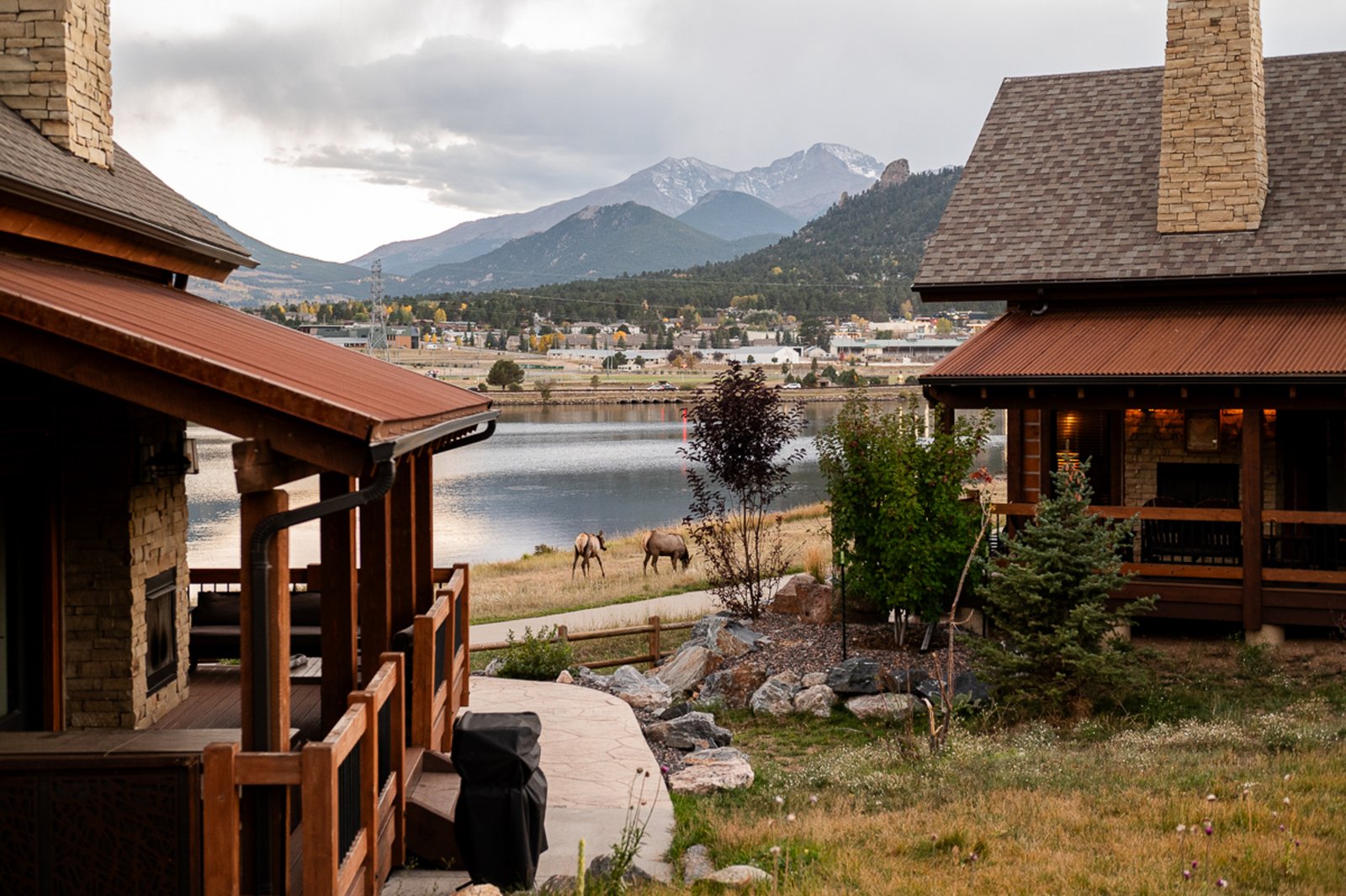
Concrete at 7,743 feet behaves differently from concrete on the plains, and Estes Park is where we plan for that most carefully. Thin air, wide temperature swings between a sunny afternoon and a freezing night, and a short building season mean that mix design, protection and curing are decisions made weeks before a pour. We build foundations, slabs, flatwork and utilities here with those conditions in the schedule from day one.
The town sits on the Big Thompson River at the eastern entrance to Rocky Mountain National Park, with Roosevelt National Forest bordering it on the north, south and east. Buildable land is limited, sites can be steep or tight, and staging space is often the hardest part of the job. US 34 links Estes Park to Loveland through Big Thompson Canyon, US 36 links it to Boulder, and State Highway 7 runs on to Boulder, Lafayette and Brighton as part of the Peak to Peak Scenic Byway. Every load of concrete, pipe or fill arrives by one of those roads.
In the September 2013 flood, Highway 34 in Big Thompson Canyon, the town's main route in and out, was washed away and sewers were strained. We treat that event as a lasting design input, and it shapes how we think about elevations, drainage and access.
Freeze-thaw exposure is the first concern at this elevation, so exterior concrete is specified with air entrainment, a low water-to-cement ratio and a cure that gives the surface time to harden before the first freeze. We work with the supplier early to confirm the mix and the delivery temperature, and we share the pour window with the engineer so any substitution is agreed before the truck rolls.
Dry mountain air and wind can pull moisture from a slab quickly, so hot and windy weather concrete practice applies even on a cool day: windbreaks, evaporation retarders and early curing. On steep or tight sites we use concrete pumping and placement equipment, because a truck cannot always reach the forms.
Estes Park now has a required freeboard standard of one foot, and a post-2013 flood report noted that every building with structural damage, including one that was destroyed, was outside the mapped floodplain. The lesson for a builder is that the map is not a guarantee. We ask the engineer where the finished floor should sit, how drainage leaves the lot and where overflow will go if the system is overwhelmed.
Foundation design on a mountain parcel often involves slopes, variable soils and rock. Drilled pier foundations are one option when the engineer wants to bypass poor surface soils, and we price them alongside spread footings so the owner can compare. Each choice changes the equipment that has to reach the site.
The cost differences in Estes Park come from time and access. A truck that takes longer to arrive and leave through the canyon or over a mountain road produces fewer loads per day, and a small staging area limits how much material can be on site. We reflect those realities in the price and in the schedule rather than promise plains productivity.
Excess spoil is another driver. Where a site is tight, soil that cannot be reused must leave, and we price import, export and haul-off at the start. On the other side of the ledger, careful planning of the order of work, such as completing excavation and utilities before the building season peaks, keeps a project from paying for slow, repeated mobilization.
Mountain ground often brings rock close to the surface. When a trench or foundation hits it, rock and hard ground excavation requires different equipment, slower progress and a plan for noise, vibration and spoil. We ask about rock early in the geotechnical review and set a unit price for it so a discovery does not become a dispute.
On slopes, we protect the excavation, keep equipment on stable ground and limit the number of people in the work zone. Access roads are built as part of the job where needed, and they are graded for drainage so a mountain thunderstorm does not undermine them.
A visitor town builds lodging, restaurants and civic facilities, and each has its own concrete needs. A hospitality or hotel project involves foundations, parking and entry flatwork that must be dry, safe and attractive, often under a tight pre-season deadline. We work back from the opening date to set the pour calendar.
Public projects for municipal and public works owners include roads, drainage structures and utility upgrades. Those owners value documentation, and we provide test reports and daily logs in the format their inspectors use, with attention to the flood history that shapes what the town expects.
Crews and materials reach town from the plains by the canyon or a mountain road, and we plan that trip as part of the job. Working from our base in Fort Collins is a different proposition from working from within the town, so we price mobilization and travel separately.
For owners who have projects in both the mountains and the plains, we can combine mobilization and schedule crews so they move between sites efficiently. We also advise on the best season: late spring through early fall is the workable window, and the earlier the work is planned, the better the choice of dates.
Send the site plan, the geotechnical information and your target dates. We will return a price and schedule with the altitude, access and weather allowances spelled out.
The main differences are air entrainment for freeze-thaw durability, temperature control during placement and a longer attention to curing. The supplier adjusts the mix, and we confirm it before the pour. The engineer's specification governs, and we do not substitute without agreement.
Late spring through early fall is the most reliable window. Cold weather concrete is possible with heat, blankets and monitoring, but it adds cost and risk. We plan the schedule so exterior flatwork and foundations are done early enough to cure before hard freezes.
It affects elevations, drainage and the town's expectations. The town now requires one foot of freeboard, and the flood report observed that damaged buildings were outside the mapped floodplain. We ask the engineer to review drainage paths and finished floor elevations, and we build to those drawings.
Often yes, with a pump. We survey the access road, check grades and turning room, and confirm the supplier can reach the site. If not, we propose alternatives, such as a longer boom, a smaller truck or a staging area where concrete is transferred.
We discuss that possibility up front and set a unit rate for rock excavation. When it is found, we document the extent, take photographs and proceed with the appropriate equipment. The owner sees the quantity and the rate before the cost is final.