In July 1997 a flash flood hit Fort Collins after 10 to 14 inches of rain fell over 31 hours, and in September 2013 four days of heavy rain flooded Loveland along the Big Thompson River. Those storms were extreme, but they are useful reminders for anyone who disturbs soil near the foothills: the ground that is stable on a dry day is not the same ground in a downpour.
Erosion and sediment control is the discipline of keeping soil on the site and clean water off it, and a stormwater pollution prevention plan, usually called a SWPPP, is the document that describes how. The plan is a legal commitment, and the controls it describes are the evidence that the commitment is being kept.
We install, maintain and inspect erosion controls for earthwork, utility and concrete projects, and we do it as a working part of the construction schedule, not as an afterthought that begins when an inspector arrives.
Construction sites that disturb an acre or more generally need coverage under the state construction stormwater permit, along with the erosion and sediment control requirements of the local jurisdiction. The plan identifies the site, the receiving waters, the controls to be installed and the schedule for maintenance and inspection. A copy has to be kept on site and kept current as conditions change.
Local rules add detail. Cities and counties on the Front Range have their own grading permits and stormwater criteria, and building departments or stormwater staff may inspect independently of the state. We read the plan and the local requirements together, install what both require and mark up the plan when the field changes, since an inaccurate plan is itself a violation.
The Cache la Poudre River is 126 miles long, drops from Rocky Mountain National Park through Poudre Canyon and Fort Collins, and joins the South Platte River about 5 miles east of Greeley. Sites near the river corridor, including those in Laporte, sit close to water that can rise quickly, and a disturbed site there sends sediment into a regulated stream.
Farther east, the land flattens and drains by ditches, laterals and gutters that feed the South Platte. Sediment that enters those systems clogs structures and affects neighbors who depend on them for irrigation. Because rain on the plains often arrives as short, intense bursts, controls are sized for the burst, not the monthly average, and a basin that looks adequate on a drawing is checked against the actual contributing area on the ground. The river and its ditches are shared by many users downstream, and a sediment complaint travels quickly. A good erosion plan treats every outfall as a point where the project could be held accountable, and we map those outfalls before the first scraper moves.
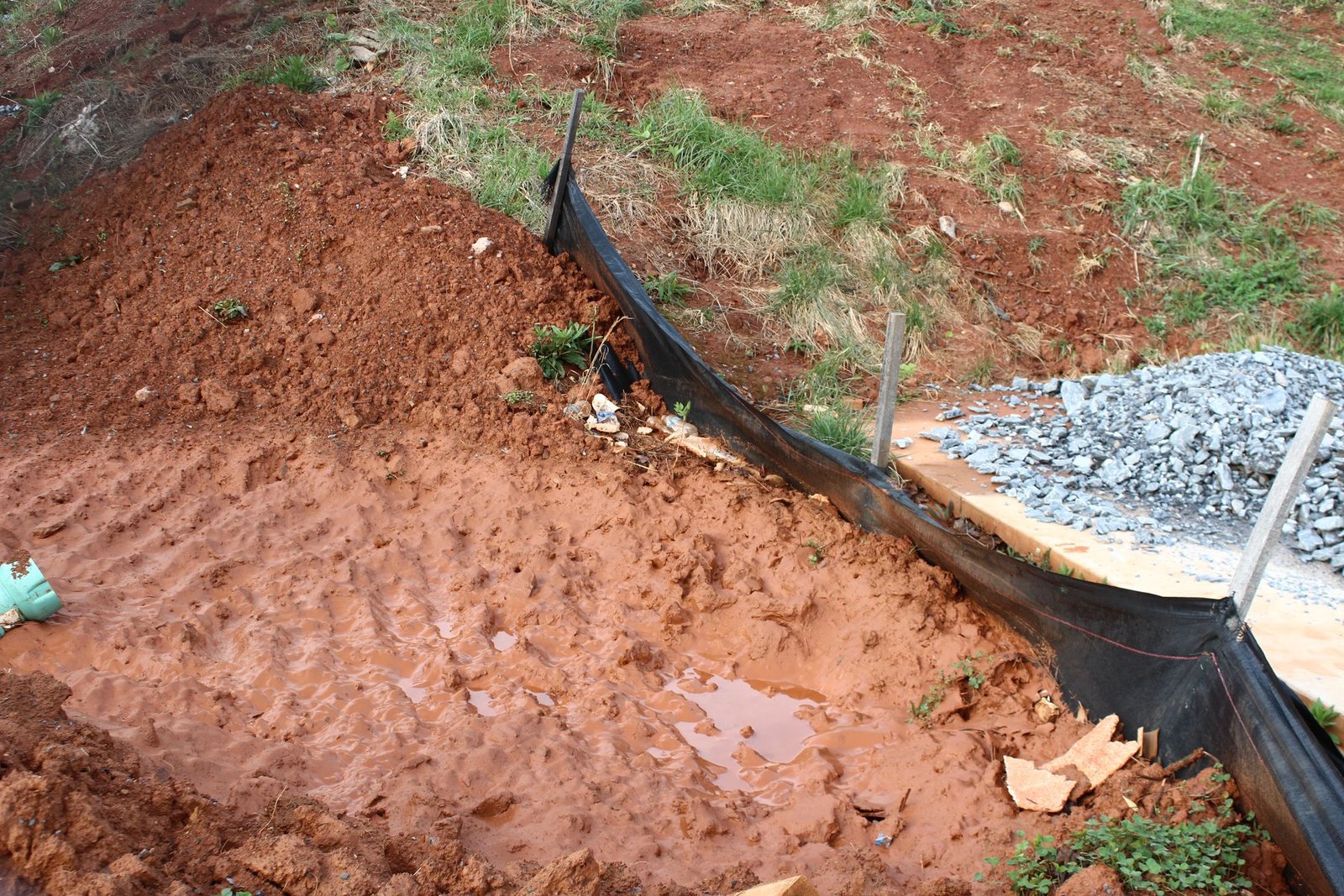
Perimeter controls such as silt fence, compost logs or wattles go in first, ahead of clearing. Vehicle tracking pads at construction entrances keep mud off public roads, and we sweep when they do not. Inlet protection goes on every storm drain that could receive runoff, and temporary swales and sediment basins are built early in the grading sequence so that they work when the first storm arrives.
Concrete washout areas deserve special mention, since a single dirty chute can contaminate a ditch. We build lined washouts, post signs and empty them before they fill. Stockpiles are covered or surrounded, and we keep them away from drainage paths and well back from the property line. Disturbed areas that will sit idle are seeded or mulched, and final stabilization is documented before a site is released. Our work is closely linked to topsoil stripping and stockpiling, because stockpiles are among the most erodible areas.
Inspections happen on a set schedule and after significant storms, and each is documented with date, observations and corrective actions. When a silt fence fails, we repair it that day; when a basin is half full of sediment, we clean it out and dispose of the material properly. A site log that shows prompt repairs tells an inspector that the system works.
Safety and environmental practice also overlap. Fuel and equipment fluids are stored with secondary containment, spills are cleaned up and reported according to the plan, and concrete and wash water never go to storm inlets. Winter does not end the obligation: frozen ground is still disturbed ground, and a thaw or a spring storm can move sediment as readily as a summer cloudburst. We keep controls in place through the cold months and check them after each thaw. We train crews so that every operator understands that protecting the receiving water is part of the job. Related earthwork, such as pond and basin excavation, includes sediment basins that become permanent detention after construction.
Erosion control rides alongside grading, utilities and paving. On a development site, mass grading opens the largest area of bare soil and demands the heaviest controls, while later phases need them to be updated as streets and lots are completed. School and campus sites, such as those serving education and school owners, add pedestrian safety to the picture, and fences and sweeping routines need to account for students and buses.
For homebuilders and multifamily developers, we offer ongoing maintenance contracts that cover many lots, since a builder with dozens of active sites cannot always keep every control in repair. The fixed cost of a regular visit is small compared with a stop-work order, and it keeps the community looking cared for.
Send the grading plan, the SWPPP and the schedule. We will review outfalls and phasing, install controls ahead of earthwork and keep them inspected and repaired through final stabilization.
If the site disturbs an acre or more, or is part of a larger common plan, the state permit and a plan are generally required. Smaller sites may still be subject to local erosion-control rules. We check the thresholds with the local jurisdiction before we price.
The permit holder is responsible, which is usually the owner or general contractor, and responsibilities are often divided by contract. We can maintain controls for the whole site or for our own work areas, depending on the scope.
The plan and permit set the frequency, and it commonly includes routine inspections and extra inspections after storms. We follow the schedule in the plan and document each visit.
We inspect as soon as conditions allow, repair or replace the control and record the corrective action. Prompt, documented repair is what regulators expect.
Yes. Every pour, pump and truck rinse needs a designated lined washout that cannot overflow into soil, a ditch or an inlet. We place and sign it before the first truck arrives, and we remove the hardened residue when the project closes.
Only after the site is stabilized, meaning vegetation or pavement has covered the disturbed soil. We document stabilization before removal and clean out any sediment that has collected.