
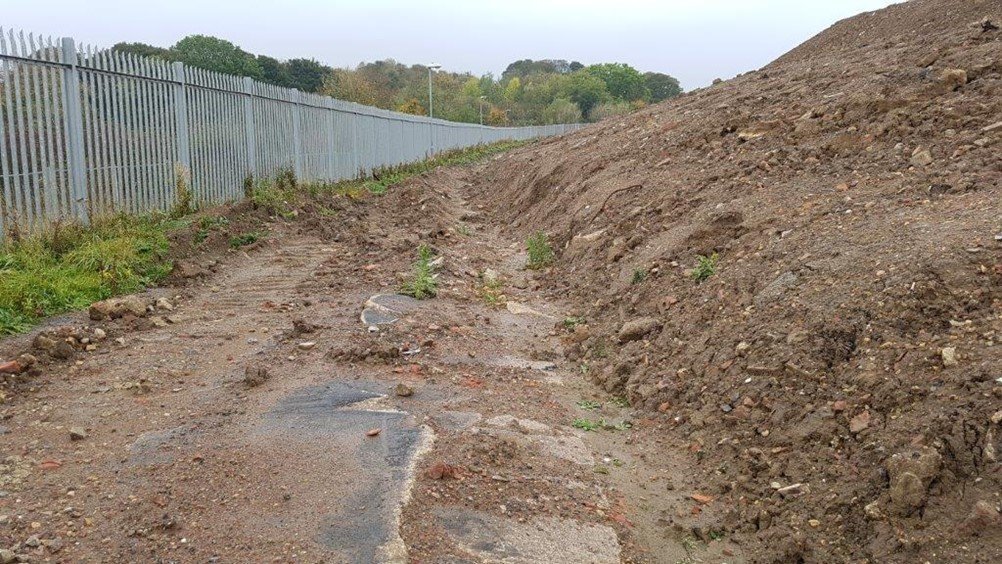
Farm ground makes poor foundation ground and very good topsoil, and the order in which a crew handles those two facts decides whether the soil gets saved or lost. The upper layer of an agricultural parcel holds organic matter that supports lawns, trees and bioswales; the layers beneath it are what the building will rest on. Strip them together, and the owner buys topsoil back later at a price that surprises everyone.
Topsoil stripping removes that upper layer from the areas that will be built on, graded or paved, and stockpiling keeps it safe until it is spread in landscape areas. It sounds like a minor item at the beginning of a grading contract, but it affects haul quantities, erosion control, weed management, landscaping cost and the compaction record under the buildings.
We perform it for developers, builders, agricultural owners converting land and general contractors who need clean subgrade and a plan for what comes off the surface.
Much of the growth around Fort Collins is happening on land that used to grow crops. Berthoud's early economy was farming, including alfalfa, sugar beets and wheat, and in Severance agriculture remains the town's primary industry despite recent residential construction. For agriculture and dairy owners who sell, subdivide or build on part of a farm, topsoil is an asset on the parcel as well as a cost to move.
We work with owners who want to keep soil on their own ground for a pasture, a field edge or a future building site, and with developers who need to take it off and place it elsewhere. The conversation is easiest at the start, before bids are set, when the stripping depth, the stockpile location and the final use can all be written into the contract.
Stripping begins after clearing and grubbing. A dozer, scraper or excavator removes the organic layer to the depth the geotechnical report and landscape plan call for, usually in the range of several inches to about a foot. Material from different areas may be kept apart if the sources differ in quality, and obvious debris, roots and rock are screened out before the soil is piled.
Stockpiles are shaped with stable side slopes and a flat top that sheds water, placed outside floodplains, drainage paths and the footprint of future work, and protected with perimeter controls. Piles that will sit for months are seeded or covered to keep them from blowing away or growing weeds. This work ties directly to erosion control and SWPPP and to site clearing and grubbing, which comes first.
We probe the site before stripping to find where topsoil is thick, where it thins and where it grades into clay or sand. That prevents two common errors, stripping too shallow and leaving organic material under a building, or stripping too deep and mixing subsoil into the pile. Test pits and the geotechnical logs help, and so does a walk with the engineer or landscape architect. On a long, narrow site we also dig a few shallow probes along the proposed pile locations, because the best time to learn that the richest soil lies under a future parking lot is before the parking lot is graded.
When the work is done, the pile has a purpose. We reserve enough material for the final cover shown on the plans, with a small allowance for settling and for the thin spots that always appear when a plan is built on real ground, and we measure the pile so that the owner knows whether there is a surplus to sell or a shortfall to fill. If the soil is going to be reused in swales or rain gardens, we keep it from being compacted by equipment, since a compacted topsoil layer does not drain or grow plants well. The rest of the grading sequence, including mass grading, plans around the stockpile locations.
Disturbed agricultural soil can carry weed seed, and a stockpile left alone will sprout them. Piles are seeded with a cover mix or covered with erosion blankets, and weed control is kept up through the stockpile's life. On a large site, a weed management plan keeps the neighbors from inheriting the problem.
Wind is a second concern, since fine topsoil blows when it dries. We water the pile and surrounding ground when needed and avoid stripping on windy days. The proximity of homes and roads matters too: dust control and haul routes should not push loads or noise onto the streets of existing neighbors. In Severance and similar growing towns, new subdivisions often sit beside working farms, and we plan so that both can coexist during construction.
We perform topsoil work across the northern Front Range, from the farm edges of Berthoud and Johnstown to the growing parcels north of Fort Collins. In Wellington, a report from August 2025 described Sage Farms as a roughly 300 acre community with neighborhood commercial in its first phase, and a project like that is a good illustration of the soil that comes off a parcel before the first street is built.
Closer to the city, smaller infill sites may have only a few inches of topsoil and little room to store it. We work out whether the soil should be stockpiled on site, moved to a temporary location or sent to a project that needs it, and we price the choice in terms the owner can compare with buying new material later. Developers building retail shopping centers usually want topsoil moved off pads and parking fields early so that the base and paving are not delayed.
Send the grading plan, landscape plan and test pit logs. We will recommend stripping depths, stockpile locations and a price that accounts for placing the soil back where it belongs.
We strip to the depth in the geotechnical report and landscape plan, normally several inches to a foot. We probe the site first because the depth varies across a parcel, and we adjust where the organic layer is thicker or thinner.
Often yes, if the engineer or landscape architect approves it. Clean topsoil can be spread in landscape areas, swales and berms. If it contains debris or contamination, it will need to be screened or exported.
A properly shaped, protected and seeded pile can sit for months or longer. The longer it sits, the more attention it needs for weeds, erosion and settlement.
It does, usually by a meaningful amount. A foot of topsoil over a few acres is thousands of cubic yards, and it has to be counted as its own item. We carry it separately in the earthwork balance so that cut and fill totals are not distorted by soil that will never be used under a building.
That depends on the contract and the land. We recommend that the agreement say whether it stays with the owner, goes to the developer or is available for sale, so that no one is surprised when it leaves the site.