
West of Fort Collins, the ground changes character quickly. Within a few miles, the plains give way to the foothills, and the Cache la Poudre River drops about 6,155 feet over its course from Rocky Mountain National Park to its mouth. A trench or foundation that is easy on the flat can be a very different job a short drive up a canyon road, and a bid that assumed soil can turn into a bid that should have assumed rock.
Hard ground excavation covers bedrock, cemented layers, large cobbles and boulders, and frozen soil that behaves like rock for part of the year. The right method depends on the material: a ripper tooth may open a weathered layer, a hydraulic hammer breaks harder rock, and blasting by licensed specialists is sometimes the only practical way to move a ledge.
We excavate hard ground for utilities, foundations and site work, and we plan around it for owners in the foothill communities and along the plains edge who need a price that accounts for what is really there.
The cheapest rock investigation is done before the contract is signed. Geotechnical borings, test pits and trial excavations show the depth, hardness and fracturing of the material, and a seismic or probing survey can fill in gaps between borings. We read those logs carefully, because the difference between weathered, rippable rock and hard, massive rock can be a factor of several in production.
Elevation and terrain add complexity. Estes Park sits at 7,743 feet on the Big Thompson River at the eastern entrance to Rocky Mountain National Park, with Roosevelt National Forest on three sides, and sites like that bring steep slopes, limited access, and weather that starts earlier in the fall and lasts later in the spring. In Bellvue, an unincorporated community at the mouth of Rist Canyon, the valley is narrow and the ground changes in short distances.
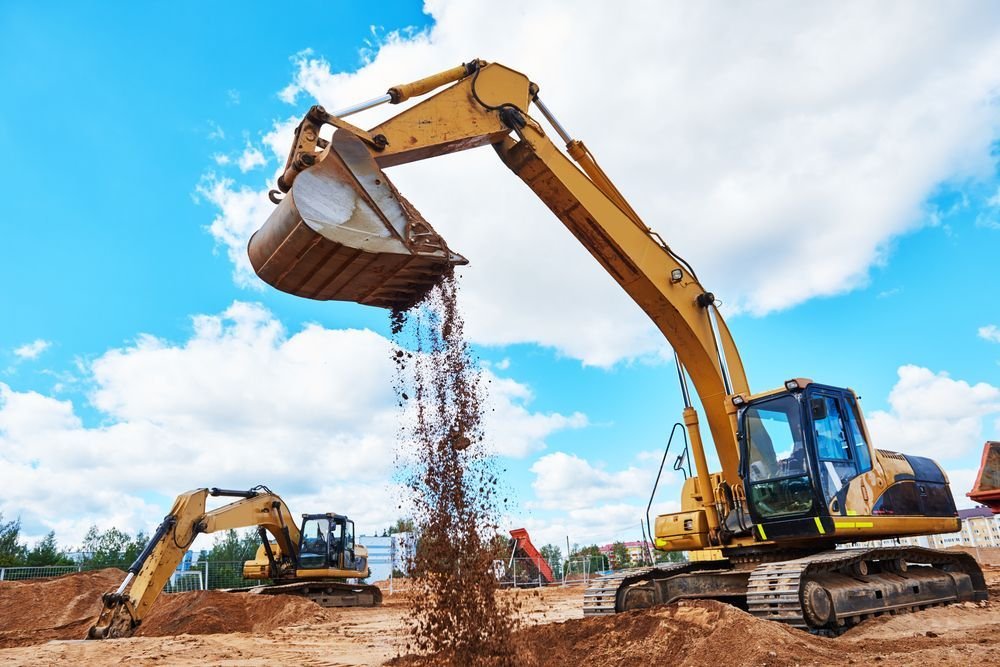
We begin with the least aggressive method that will work. A heavy excavator with a ripper tooth can open a weathered layer, and a hydraulic hammer mounted on an excavator can break harder rock in trenches and footings, with a pace that depends on the rock's strength and joints. In very hard rock, saw cutting, drilling or controlled blasting by a licensed specialist may be more efficient, and where vibration or noise is a concern, mechanical methods are preferred.
Once rock is broken, it is hauled, stockpiled or crushed. Crushed rock can often be reused as bedding, backfill or road base if it meets the specification, which turns a disposal problem into a material source. Trench lines in rock are overexcavated slightly so pipe can be bedded, and the sides are scaled to remove loose fragments. We discuss the effect on the rest of the work with the engineer and on the utilities in trenching and backfill.
We coordinate trade partners for rock work with excavators sized for the job, hydraulic hammers, ripper attachments, loaders and haul trucks, and we coordinate blasting, rock drilling and crushing with licensed specialists where those methods are called for. Rock-excavation operators must account for confined trenches and buried utilities, which matters more in rock than in soil because a hammer strike can shake a nearby line.
Before any breaking begins, we confirm the locations of buried lines by the methods in utility potholing and locating. In developed areas, we also set up vibration monitoring and agree on limits with the owner and neighbors. Productivity is tracked each shift so we can tell the owner early if the rock is harder than expected and discuss options before the budget is gone.
Rock production is slow and variable. A trench that advances hundreds of feet a day in soil may advance tens of feet in hard rock, and the pace can change from one station to the next. We schedule rock work with generous float and write a unit price for rock excavation into the contract, so that the schedule and budget can adjust as the quantities become known.
Cold weather adds frozen ground, which can be as hard to excavate as soft rock. Fort Collins building criteria list a 30 inch frost depth, and in the mountains the frost line and the freeze season are longer. We thaw frozen ground with blankets or heaters where the schedule demands it, or we plan winter work around the rock and leave soil excavation for warmer weeks. The access in Estes Park also reflects what the 2013 flood showed: Highway 34 in Big Thompson Canyon, the main route in and out, was washed away, and haul routes into the mountains should be planned with that vulnerability in mind. The general sequence is described under foundation and utility excavation.
Rock excavation is usually priced separately from soil excavation, by the cubic yard or by the linear foot of trench, and a clear definition of rock avoids disputes. Some contracts define rock by the equipment that cannot rip it, and others by laboratory strength or by seismic velocity. We recommend a definition that is measurable in the field and that both parties agree to before work begins.
Cost depends on hardness, jointing, volume, access and disposal. Mountain sites add mobilization and haul costs, and the schedule must account for weather and road conditions. Pipeline and cable work for oil, gas and midstream owners and for hospitality projects near the national park shows the range: the first has long, narrow trenches, and the second has deep foundations with tight access. In both cases, finding out about rock early saves money.
Send the geotechnical report, the trench or foundation plan and the site access. We will review the rock conditions, recommend methods and quote rock and soil excavation separately so that the budget stays honest.
Geotechnical borings, test pits and a trial trench show the depth and hardness of rock. We read the logs and, where there are gaps, recommend additional probing before bidding or during early work so the budget reflects the ground.
Blasting is done by licensed specialists, and we coordinate it where it is the best method. In developed areas we prefer mechanical methods such as hammering or ripping, which have less vibration and fewer permitting steps.
Usually as a separate unit price per cubic yard or linear foot, with a written definition of rock. That keeps soil excavation on the base price and lets the owner pay only for the rock actually encountered.
Often, as bedding, backfill or road base, if it can be crushed or screened to the specification. Reusing it reduces haul and import costs, and the engineer decides whether it qualifies.
We thaw it, work around it or schedule excavation outside the coldest weeks. Frozen soil cannot be used as backfill, so we also keep spoil protected and plan winter trenching carefully.