A road is a thin layer of pavement resting on a thick layer of decision. The asphalt or concrete takes the traffic, but the subgrade beneath it takes the load, and a street that fails in five years usually failed first in the ground. We prepare subgrades so the pavement above has a chance to last as long as the designer intended.
Subgrade preparation is the work between the underground utilities and the aggregate base: cutting or filling to the roadway template, removing soft spots, conditioning the soil to the right moisture, compacting it and proving it. It sounds routine, and it is, until a wet spring or a pocket of clay shows up in the middle of a collector street.
We perform this work for municipalities, developers building their own streets and contractors on highway and arterial projects, always to the agency standard and with its inspectors in the loop.
The northern Front Range keeps adding road. A 2013 city study of Harmony Road involved about $53 million in potential improvements, including widening four-lane sections, raised landscaped medians, buffered bike lanes and continuous sidewalks, and State Highway 56 runs 9.5 miles from US 287 in Berthoud east to I-25 exit 250 in Johnstown. Projects like those depend on subgrade prepared along a long, narrow strip with utilities, drainage and traffic all competing for the same space.
The interchange at I-25 and Mulberry is another reminder that roads here are rebuilt as well as extended. CDOT's project cites unconventional traffic operations, flooding concerns and aging infrastructure, with bridge replacement and flood mitigation among its stated benefits. Whether the work is new alignment or reconstruction, the subgrade is the part that cannot be seen afterward, so it is the part we document most carefully, with station-by-station notes on soil type, moisture and test results that the agency can keep in its file for the life of the road.
Municipal and public works departments are our most common road clients, and they come with specifications, hold points and inspectors that shape the work. We are comfortable with agency procedures: submittals before work, inspection requests, test frequency and as-built records.
Developers building subdivision streets are a close second. They want the same quality at a pace set by home construction, with streets finished in phases as lots sell. We work with their engineers on the pavement section and the subgrade requirements, and we price stabilization options such as those in lime and cement soil treatment when the native soil will not otherwise support the design.
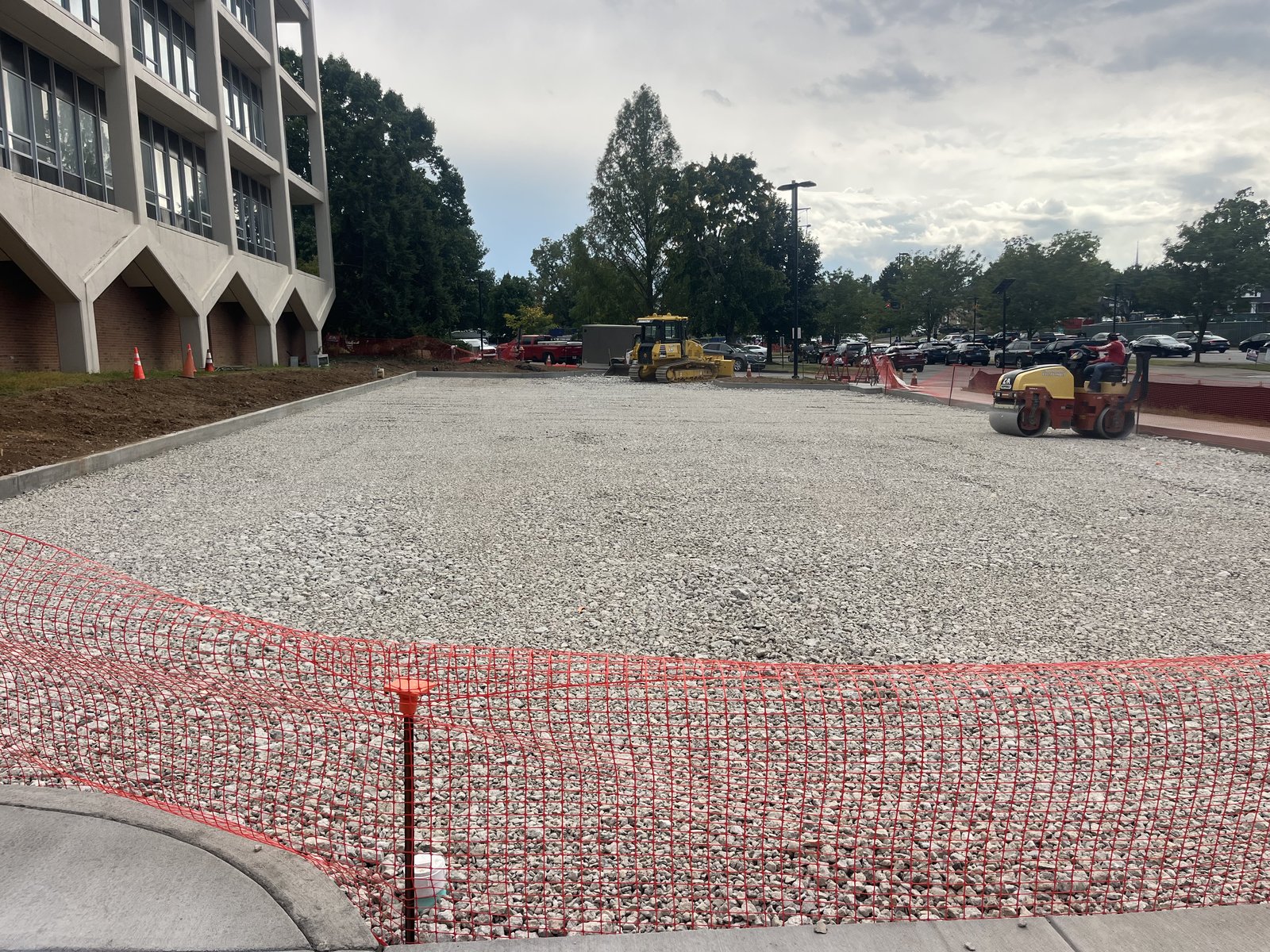
The roadway template is cut to the design depth below finished surface, accounting for the thickness of pavement and base. Utilities have normally been installed and backfilled, and trench lines are checked for settlement. Unsuitable material, including organic soil and wet pockets, is removed and replaced, and the exposed subgrade is scarified, moisture conditioned and compacted to the agency requirement.
A proof-roll with a loaded water truck or heavy roller follows. Any area that ruts, pumps or deflects is corrected, and the agency inspector or testing firm accepts the subgrade before base goes on. Along the edge, we shape the subgrade at the curb line or shoulder so that it works with curb and gutter and drainage, and we shape the grade to prevent water from lingering under the pavement.
Road projects follow the standards of the agency that will own the road, whether a city, a county or the state, and those standards define the density, moisture range, test frequency, tolerances and acceptance procedure. We keep copies of the applicable sections on site and brief the crew on them before the first shift, since a change in the standard from one jurisdiction to the next is a common source of error.
Right-of-way work involves permits, traffic control plans and utility coordination. Haul routes, lane closures and work hours must be agreed in advance. Documentation includes daily reports, test results and as-built surveys, and we keep them so that the owner can hand the road to the agency without a scramble. Where the road serves a campus or facility, such as government and municipal buildings, we coordinate access for staff and the public.
Subgrade cost varies with soil type and weather more than with area, and it is the line in a road budget that moves most often once the ground is opened. A site that is dry, granular and straight can be prepared quickly, while one with wet clay needs drying time, stabilization or replacement, all of which add cost and days. Long, narrow roadway work is also affected by traffic control, utility conflicts and the need to work in short segments.
Where Harmony Road is the main east-west commercial corridor in Timnath, a project of any size must also accommodate adjacent businesses and daily traffic. We price the added time into the unit rate and into the traffic control line, and we discuss with the owner whether night or weekend work is justified by the savings in disruption. Stabilizing weak soil early, instead of after a failed proof-roll, is the single best way to avoid overruns, and it fits with the broader subgrade strategy in asphalt paving base preparation.
Send the pavement design, the geotechnical report and the project limits. We will review subgrade conditions, propose stabilization where it makes sense and price the work to the agency standard.
A proof-roll is a pass of a loaded truck or heavy roller over the subgrade to reveal soft spots by rutting or pumping. The agency inspector or the testing firm witnesses it, and areas that fail are corrected and re-tested.
The agency specification sets it, usually as a percentage of maximum laboratory density within a moisture range. We build to that number and the testing firm confirms it with density tests at the specified frequency.
We dry it by scarifying and aeration where the weather allows, stabilize it with lime, cement or geosynthetics if the design permits, or remove and replace it. The method depends on depth, area, time and cost.
Subgrade can be prepared when the ground is not frozen. Frozen soil cannot be compacted, and thawing can leave soft spots, so we avoid covering frozen subgrade and re-check after thaw.
We report it to the engineer with test results and photographs as soon as we see it. The designer can adjust the pavement section, call for stabilization or approve a removal and replacement. Changes agreed in the field and recorded the same day cost far less than ones argued after the pavement is placed.
We can, or we work with the traffic control subcontractor the owner selects. The plan has to be approved by the agency before we close a lane or reroute traffic.