Water decides where a curb line goes. A curb and gutter section is a small concrete channel with a big job: it carries stormwater to inlets, protects pavement edges from breaking up, guides traffic, and defines the edge of every drive aisle and parking field. A gutter that holds a quarter inch of standing water is visible after every rainstorm, and a curb that is a half inch off line is visible from the street every day.
We install curb and gutter for developers, general contractors and public owners in Fort Collins, Loveland, Windsor, Johnstown and surrounding towns. Most jobs involve long, continuous runs where grade accuracy matters more than finish detail, with short hand-formed sections at radii, inlets, ramps and tie-ins.
The work rewards a crew that surveys carefully, checks grade at every stake, and does not leave a trowel mark on the face of a curb that the city's inspector will walk with a level.
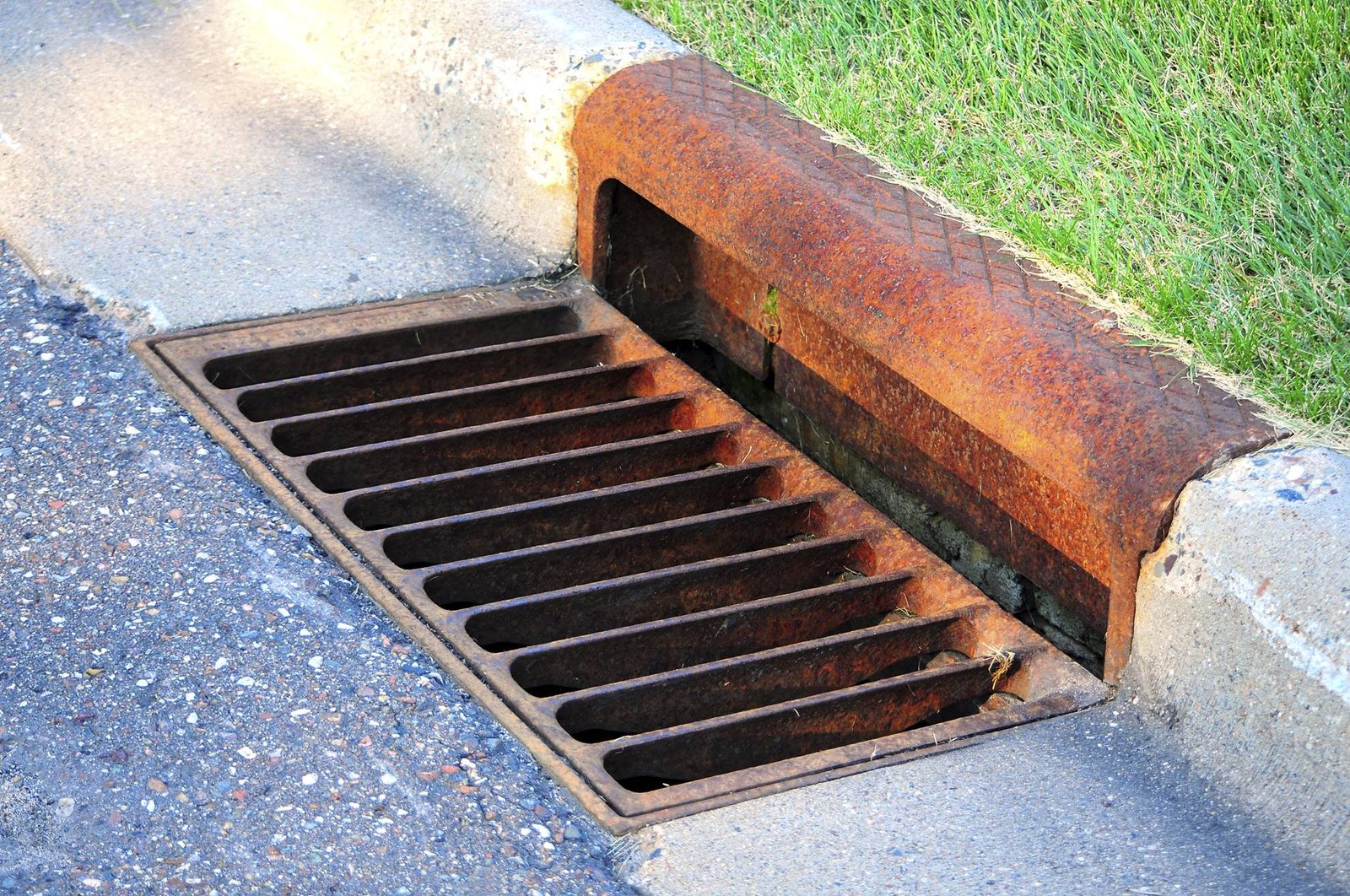
Vertical curb, mountable or rolled curb, and curb with integral gutter each serve a different purpose. Vertical curb gives positive separation between pavement and landscape or sidewalk. Mountable and roll curbs allow vehicles to cross at driveways and medians. Gutter widths and cross slopes depend on the street or lot type and the local standard. Valley pans and cross pans carry water across a drive, and curb inlets and drainage structures need to be tied in at exact elevations.
Our scope covers subgrade trimming, base placement, string line or stake setting, slipforming or hand forming, joint cutting, finishing, curing, and backfill behind the curb. For medians and islands we handle the small radii by hand. Curb cuts and ramps are built to the accessibility details on the plans, and we coordinate with the sidewalk crew so that the transitions meet cleanly.
Because curb and gutter is mostly about water, we check slopes before concrete is ever ordered. We shoot the base and string line against the civil plans, verify flowline elevations at inlets and low points, and identify any conflicts between the curb alignment and utility structures such as manholes, valves and vaults. A valve box set an inch high or low in the gutter is a headache for everyone, so we coordinate adjustments with the utility crew.
Stormwater structures define the grades, and they connect to trench drains and concrete drainage features where a lot has to shed water across a drive. In a river city, where the Cache la Poudre is described as subject to sudden, destructive floods, the street system also has to handle large flows, and the curb and inlet system is the first part of that. For a business park or lot, we look at where water enters and leaves the site, and we check that the gutter line directs it to inlets rather than toward buildings or neighboring property.
Curb and gutter in public streets follows the standards of the city or county that will own the street. Those standards define section dimensions, joint spacing, concrete strength, air content, base thickness and testing. Private lots typically follow the project specification with similar parameters. Air-entrained mix is standard in Colorado because of freeze-thaw cycles and deicing salts.
Inspections are frequent. Inspectors check the base, forms or string line, reinforcement where required, and finished grade. They look for water ponding in gutters by flowing water or by level. A 2013 city study of Harmony Road contemplated widening four-lane sections and adding raised landscaped medians, which is the kind of work that puts new curb, gutter and median curb into an arterial. We plan inspections around traffic control and street closures, which are often limited to certain hours.
We coordinate trade partners for both slipform and hand-formed curb. A slipform machine places long runs quickly with a consistent profile, and it requires a base that is trimmed accurately and a mix with the right slump. Hand forming handles radii, returns, tight spots and sections around structures. The trade team moves between both methods as the plan requires, and the concrete trade partner coordinates the concrete paving edges with the curb so the handoff is clear in the schedule.
Finishing is part of the same craft. After the curb is placed, the face is broomed or finished to the standard, joints are tooled or sawed, and curing compound goes on immediately. We backfill behind the curb in lifts and compact it so it does not settle. When a section fails the inspector's level test, the concrete trade partner plans the required replacement against the inspection schedule.
Linear footage is the main driver, and long, straight runs are the most economical. Short runs with many radii, inlets and transitions take more labor per foot. Mobilizing a slipform machine is worth it above a certain footage; below that, hand forming may be cheaper. Reinforcement, special mixes and winter protection add cost, as does traffic control in public streets.
Base and subgrade conditions also matter. A soft subgrade requires stabilization before curb can be placed, and an untrimmed base costs time. In growing communities such as Evans, where the population rose almost 20 percent between 2010 and 2020, subdivision streets and commercial parcels create a steady stream of new curb and gutter. We price work for municipal and public works projects and for commercial developers, including options for different curb profiles. Coordinate with sidewalks and flatwork and parking lot concrete to avoid duplicate mobilizations.
Send the civil plans and quantities. We will return a unit-price bid by profile, with slipform and hand-formed lengths, inlet tie-ins and inspection steps spelled out.
Curb and gutter is a combined section: the vertical or rolled curb and a sloped gutter pan poured together. Standalone curb has no integral gutter and is used around landscaped areas, islands and some parking lots. The plans specify which one belongs where.
We control grade at every stake and check the flowline with a level and a laser. Gutters should slope continuously to an inlet or outlet, and the minimum slope is set by the standard. After placement, we flood-test suspect areas when the specification or the inspector asks.
Yes, with protection. We use warm mix, blankets and extended curing, and we do not place on frozen base. In very cold stretches, we wait. A frozen curb section may need to be removed, which costs more than waiting.
Contraction joints are typically spaced about 10 feet, and expansion joints are placed at structures, driveways and at intervals set by the standard. The exact spacing comes from the local standard or the project documents.
Yes. We saw-cut a clean line, remove the damaged section, prepare the base, and place new curb with dowels or bonding as the design requires. Matching the profile and the finish takes care at tie-ins.