The big slab gets the attention, but the project is not finished until the small concrete is in. Bollards at the gas meter and the storefront, bases for light poles and signs, trash enclosure slabs, transformer pads, mow strips, planter curbs and bike rack footings are the pieces an owner discovers are missing on the day before the certificate of occupancy. We pour this work as part of the site package, with its own schedule and its own quality checks.
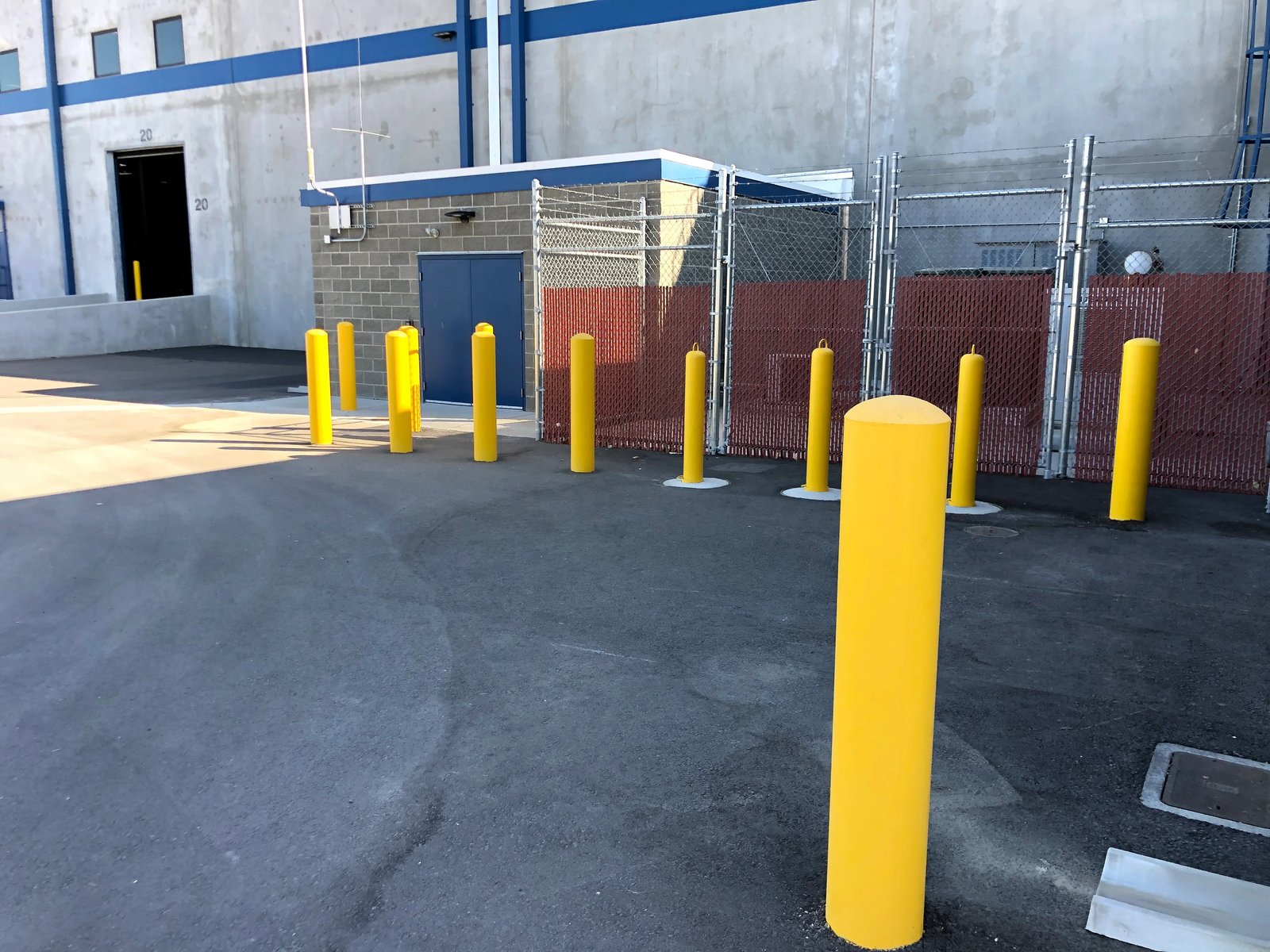
Bollards are the most safety-critical of the group. A pipe set in a footing and filled with concrete protects a doorway, a fuel dispenser or a piece of equipment from vehicle impact, and the footing carries the load. We follow the detail on the drawings for diameter, depth, reinforcement and fill, and we do not substitute thinner pipe or shallower holes. Where a crash rating is specified, the foundation detail is part of the rating and has to be followed exactly.
Foundations for outdoor items must also go below frost. Fort Collins building design criteria list a 30 inch frost depth, so a bollard or pole footing that is shallow will heave. We drill to depth, check the diameter, and set anchor bolts or sleeves to template before the concrete goes in.
The northern Front Range is building retail, industrial and mixed-use at a steady pace. The Plaza at Riverbend in Timnath is a 39,000 square foot, two-building commercial condo project at Harmony Road and Signal Tree Drive, less than a mile from I-25, and it was the town's first neighborhood commercial development. Every such project needs its trash enclosure, light bases and curbed planters before tenants open.
Johnstown's Ridge is a 265 acre master-planned mixed-use site with 90 acres of I-25 frontage, and in Evans, three new industrial buildings on Brantner Road were built in 2025 near Highways 85 and 34. Sites of this kind have many small concrete items spread across large lots, which makes coordination and haul distances matter. We stage the work so crews and trucks move once through each area.
Buyers of these sites, from developers to tenants' contractors, rarely track small concrete until it holds up an opening. We list every item on the site plan with its detail sheet, quantity and sequence number, and review the list with the superintendent at the start of the job, so nothing is discovered late and the punch list stays short.
Light pole bases are drilled shafts with anchor bolts set to the template, usually in a cage of vertical bars and ties. Dumpster pads and trash enclosure slabs are thicker than ordinary walks because garbage trucks are heavy, and the pad needs a slope to keep water away from the gate. Transformer and switchgear pads are set to the utility's dimensions and conduit layout, with sleeves for the primary and secondary cables.
Mow strips, curb islands, wheel stops, planter curbs and bike rack slabs are cast with formed edges or extruded machines. Each has an expected finish and joint pattern. We aim to leave them uniform with the rest of the site: matching the broom direction, cutting joints at consistent spacing and keeping color consistent from pour to pour.
Reinforcement and embedded items are checked before every pour: bars tied to the bolt cage, sleeves capped against debris, conduit stubbed to the height the electrician needs. Bollard pipe is cut to length, capped, and filled with concrete that is rodded to remove voids, then crowned at the top so water sheds away from the steel. Painted or sleeved bollards are protected from splatter until the finish is applied.
Digging holes for bollards and poles is where buried utilities get hit. Before any drilling, we have the site locates, review the utility plan and, where records are thin, pothole. A bollard moved six inches is cheap; a cut fiber line is not. For accessible routes, bollard spacing and placement must leave clear widths, which links this work to ADA ramps and accessible routes.
Inspections vary. Light pole bases and transformer pads are often checked by the electrical inspector or the utility before the pour, and bollards at fuel dispensers may be reviewed by the fire official. We schedule inspections ahead of the pour and keep photographs of reinforcement and depth for the file.
The order of work matters. Bollard footings are drilled before the paving is poured, or sleeves are cast into the pavement for removable posts. Light pole bases are set before the surrounding asphalt or concrete is placed, so the conduit and anchor bolts are not cut through later. We prepare a sequence plan with the paving crew, which saves a cutout and patch around every item that was missed.
On large lots, we work with concrete paving and parking lot concrete crews and with the electrician to coordinate sleeves, conduits and finish grades. A few extra hours of planning at the start of a project shortens the punch list at the end.
Retail owners often ask us to price the small concrete with the main flatwork, which fits retail shopping centers where the parking, the sidewalks and the pad sites are all being built at once. Developers who buy a package from one contractor have a single schedule to manage. That kind of work is a core part of what commercial developers expect from a site concrete contractor.
Self-storage and light-industrial owners need gate operator pads, bollards at overhead doors and dumpster slabs, and they want them done before tenants arrive. Whether the site is in Timnath, Johnstown or Evans, we plan these items from the first site walk.
Send the site plan and the details sheet. We will price each item, sequence it with your paving and flag any utility conflicts.
Depth follows the drawing, and in northern Colorado footings generally go below the 30 inch frost depth. Crash-rated bollards often require deeper and wider foundations. We follow the detail exactly.
Yes. A sleeve is cast into a footing and a removable post drops in with a lock. We set the sleeve plumb and at the right elevation, and we keep the sleeve clean until the post is installed.
Thickness is set by the truck loads and the engineer, and it is usually heavier than a sidewalk. We use reinforced concrete, slope it to drain away from the gate, and detail the apron where trucks turn.
We stop, report and let the utility owner respond. This is why we locate and pothole first. Having a clear process in the contract keeps a mistake from turning into a long delay.