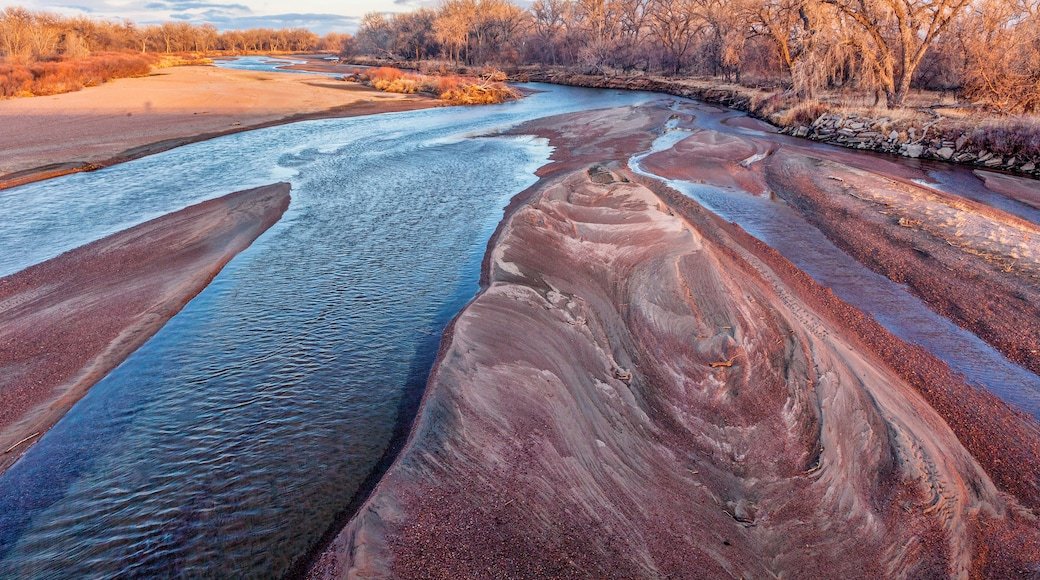
At 4,623 feet, Kersey sits low in the river bottom, where the South Platte River collects water from across the Front Range. For a contractor, low ground near a big river means a high water table, sandy and gravelly soil, and trenches that fill as fast as they are dug. We plan foundations, pads and pipe in Kersey for that, with pumps, shoring and a pour plan that expect water.
The town is in Weld County with 1,454 residents in 2010 and 1,495 in 2020, a small community with steady farm and service activity. US 34 runs about 260 miles across Colorado east of Greeley, crosses the South Platte River, and its Weld County junction list includes County Road 53 at Kersey. A fur trader set up a post on the river nearby in the 1830s, a reminder that this crossing has always mattered. Trucks reaching Kersey travel that same US 34 corridor, and our haul plans follow it.
Farm owners, small developers and contractors working in the area call us for slabs, equipment pads, driveway approaches, culverts and utility service lines. We keep the scope simple and the explanation plain.
Kersey is east of Greeley on US 34, and that road is how the trade crews, concrete and pipe arrive. The distance is short enough for ready-mix to arrive within its time limit, which matters more than people expect. A truck that waits at a bridge or detour loses working time on the concrete, so we confirm the road is clear before we dispatch. Because the river crossing is the one fixed point on the route, we also keep a second routing in mind in case a closure or an accident shuts the bridge on pour day.
From Kersey we also reach nearby towns such as Eaton and Milliken. Grouping jobs in the same area keeps mobilization costs down and gives us a crew on hand for any follow-up work.
Soil near the South Platte is often alluvial: layers of sand, gravel and silt deposited by the river over time. Those soils bear loads well when compacted but are prone to caving in trenches, and groundwater sits close to the surface. A good soils report and a few test pits tell us what we face before we price.
When water is a factor, we plan for dewatering and groundwater control with sumps, well points or trench pumps, and we direct discharge to an approved location with sediment control. Footings and slabs are poured on a stable, dry subgrade, never in standing water, and floor elevations are set with the flood and groundwater picture in mind.
The most common work in a small farm town is practical: equipment pads, shop slabs, feed and wash pads, and driveway approaches on county roads. Each has its own requirements, and a washdown pad needs a sloped floor and drainage that the owner can maintain. We design the joint layout and the finish around how the pad is used.
Where a drive meets a county road or a ditch, we install the culvert and headwall and pour the apron to the standard. Utility service lines for water and power are trenched and backfilled in lifts, with the compaction tested where the specification calls for it.
Wet sand makes unstable trench walls. We never rely on the stand-up time of a cut: trenches deeper than the allowed depth are sloped back or shielded, spoil is kept a safe distance from the edge, and a competent person inspects the excavation before anyone enters it. After rain or a pump failure, the inspection is repeated.
We also respect the agricultural setting. Irrigation ditches may be flowing or may be turned on without notice, so we confirm schedules with the ditch company and keep work away from the banks when water is moving.
Groundwater levels in river bottoms rise and fall with the seasons and with irrigation. The best time for deep excavation is usually when the water table is lowest, and we schedule accordingly when the owner has flexibility. Cold weather brings its own protection needs, with heated mix and blankets for slabs poured after the first hard freezes.
Because many farm owners are busy in the growing season, we also schedule around harvest and planting where we can. A pad that has to be ready before the fall is poured and cured in late summer, when the weather helps the concrete and the owner has time to inspect.
The trade crews dig, form, place and finish, which matters when the work is small and the weather is uncertain. We can open the ground, pump it dry, place the base and pour concrete in one day when conditions allow. That shortens the time the excavation is open and exposed to groundwater.
For owners who need more than one service, we coordinate the work for agriculture and dairy operations, small developers, and contractors. A single phone call covers grading, concrete and pipe, which is easier than hiring three companies, particularly for owners who are also running a farm.
Tell us what you need to build near the river and what the ground looks like. We will bring a plan for water, soil and concrete, with a price you can compare.
We plan for it. Pumps, sumps or well points keep the excavation dry, and the discharge is directed to an approved location with sediment control. We do not place concrete in standing water, and we may adjust the subgrade with clean gravel if needed.
Yes. The pad is sloped to a drain or collection point, reinforced for the loads, and finished for traction. We discuss where wash water goes and whether containment or treatment is required, since that affects the design.
We follow the county standard for the apron, culvert and slope, and coordinate any permit or inspection with the county. If a ditch crosses the approach, we install the culvert and headwall to the required size.
Yes. For unincorporated Weld County, the 2024 International Building Code took effect June 15, 2026, and most new structures need an engineered foundation design. We build footings and slabs to the engineer's drawings.
Often when the water table is lowest, which varies by season and irrigation. We look at the site history and test pits to estimate groundwater, then plan the schedule around it when we can.